

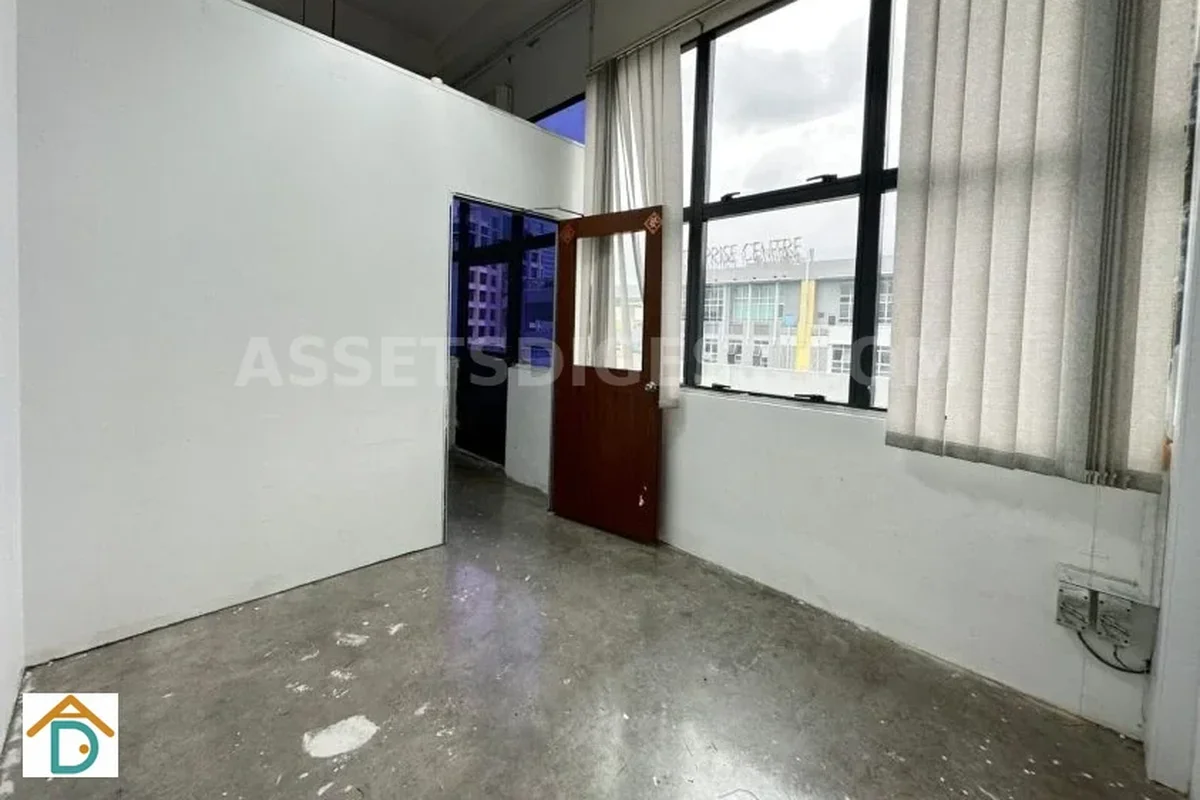
The scenario plays out regularly in Jurong and across Singapore’s industrial estates: a manufacturing SME signs a two-year flatted factory lease, moves in their equipment, and six months later discovers two things. The upper-floor loading limit can’t support their heaviest machine, and their morning delivery schedule keeps clashing with the shared goods lift. That experience leads some operators to assume they should look at “nicer” space. But business park isn’t a premium tier of industrial. It’s a distinct URA zoning category with strict use restrictions that the landlord cannot override. The decision between business park and standard industrial starts with a single question: does your primary activity qualify?
The decision between business park and standard industrial space turns on one thing: what URA zoning category the land is designated under, not price or aesthetics. That designation determines what activities are legally permitted, and no amount of landlord flexibility or premium fit-out can override it. Understanding this distinction before your search prevents wasted viewings and avoids committing to a space that cannot legally host your operations.
Business Park Is a Zoning Category, Not a Description
Under URA’s Master Plan, business park zones fall under the White zone or specific Business Park zones. These are designated for knowledge-intensive activities that the government wants to concentrate in supported environments: typically near MRT stations, in designated economic zones like one-north, and in campus-style settings.
The White zone framework was introduced precisely to prevent the displacement of knowledge-intensive industries from central locations by higher-rent commercial or residential developments. Its use conditions are conditions of approval for that land parcel, not suggestions and not landlord preferences.
Private business parks (Mapletree Business City in the west, AXA Tower in the city fringe, certain developments in one-north) operate under the same URA zoning framework. The distinction between JTC-managed and private business parks is about ownership and lease structure, not zoning rules.
What Activities Qualify
The guiding principle is that activities in a business park should be clean, knowledge-intensive, and not generate significant noise, emissions, or traffic impacts beyond what an office building would produce.
Activities that typically qualify include R&D work that does not involve pilot-scale production, software development and data analytics, biotech and life sciences research without manufacturing, media production and design studios, corporate headquarters functions, and prototyping and lab work at a scale that remains within the building’s approved use.
Physical production at any meaningful scale doesn’t qualify: batch manufacturing, assembly lines, food processing, cold storage operations. The line is drawn at activities that create fire load, require industrial exhaust, involve significant vehicle traffic for goods movement, or produce noise or emissions beyond what an office environment generates.
If your business includes any physical production component, verify with the building’s approved use and with URA before assuming a business park unit is available to you.
What Changes Day-to-Day
The practical differences between business park and standard industrial space extend beyond permitted activities into the operational fabric of the building.
Tenant mix shapes the environment. In a business park, your neighbours are likely to be other knowledge-intensive companies, professional services firms, or R&D operations. The ambient noise profile is office-low. If your activities generate noise above what a typical office produces, complaints are likely and building management will respond.
Common area standards in business parks reflect their target tenant profile. Landscaped courtyards, well-appointed lobby areas, meeting room facilities, and sometimes shuttle bus services are standard. These amenities come with the rental premium, but they also reflect the building’s intended use: the space is designed for professional working environments, not industrial operations.
Operating hours in business parks typically mirror commercial office hours. If your operation requires 24/7 access, overnight equipment use, or significant after-hours vehicle movements, the building’s rules and your neighbours’ expectations will be in tension.
The rental premium is substantial. Business park rentals in Singapore typically command a significant premium over standard industrial. The exact differential varies by location and building quality, but the direction is consistent. You are paying for the environment, the address, and the zoning designation, not for raw industrial functionality.
When Business Park Makes Sense
Business park space offers real advantages if your business genuinely qualifies: your primary activity is knowledge-intensive, you have some lab or prototype work that fits within the building’s specifications, and you value the professional environment and address.
The concentration of knowledge-intensive tenants in campus settings like one-north or Jurong Innovation District creates networking and talent-acquisition benefits that standard industrial locations do not. Proximity to MRT and other amenities improves staff accessibility. The building specifications (air conditioning, raised access flooring, better natural light) improve working conditions for knowledge workers.
When Standard Industrial Is the Only Viable Option
If your business involves any form of physical production, warehousing, logistics, or equipment that creates noise or vibration beyond office levels, a business park is not available to you regardless of your willingness to pay the premium.
The zoning cannot be negotiated. Attempting to operate a business park-eligible activity that creates friction with the building’s environment, or operating a non-qualifying activity in a business park, exposes you to enforcement action from URA and building management consequences including lease termination.
Standard industrial space (flatted factory, ramp-up factory, or detached factory) is the appropriate track for businesses with physical production, storage, or logistics components. The environment is different, but the functionality matches the operations.
What to Do Before You Commit
The choice between business park and standard industrial starts with a single question: does my primary activity qualify under URA’s business park or White zone framework? If yes, the business park environment offers meaningful advantages. If no, standard industrial space isn’t a fallback. It’s the correct category for your operations.
Verify the zoning before committing to any viewings. The URA Master Plan is publicly available and allows you to check the designated use for any land parcel. The landlord’s or agent’s description of the building should match what URA’s records show; if there’s a discrepancy, treat that as a red flag.
For a full comparison of all four JTC space types including business park, see the JTC space types overview. For understanding the zoning layer that applies regardless of building type, the B1 vs B2 guide covers the use classification framework.
References
- URA — Development Control Guidelines: Business Park — Official URA guidelines for business park use conditions
- URA — Development Control Guidelines: White Zone — White zone framework and qualifying activities
- URA Master Plan — Official zoning designations for all land parcels in Singapore
- JTC Corporation — Business Park Listings — JTC business park space availability
- BCA — Building Control — Building standards relevant to business park specifications
- EDB Singapore — Knowledge Industries — Economic Development Board guidance on knowledge-intensive industry designations
- URA — Development Control Guidelines: Non-Residential — General development control framework for non-residential uses
- BCA — Green Mark for Business Parks — Environmental standards applicable to business park developments