

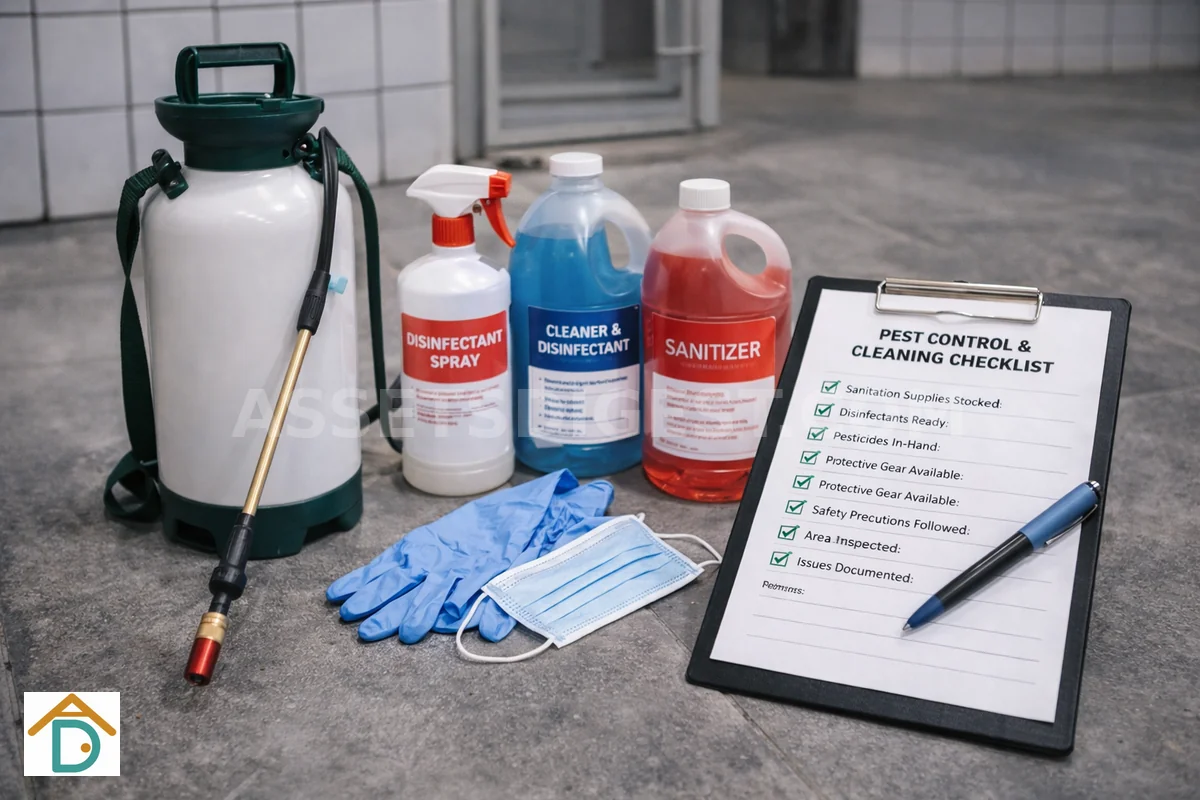
Pest control is a mandatory SFA licence requirement for food factories. It is not optional, and it is not something you address after the licence is granted. Pest contamination in a food production environment can result in licence suspension, product recalls, and reputational damage that outlasts any fine. Prevention starts with the physical space itself: before you engage a pest control operator, before you submit your SFA application, and ideally before you sign the lease.
Physical Pest Prevention
The first line of defence against pests is the physical condition of the premises. SFA inspectors evaluate this during licensing inspections. The standard requirements cover several areas:
Entry points. All gaps, holes, and joints between walls, floors, and ceilings must be sealed. Pest entry points commonly occur where wall panels meet the floor, where services (pipes, conduits, ducting) pass through walls, and around door frames where the seal is incomplete. During viewing, run your hand along wall-floor joints and around service entries; if you can feel gaps or airflow, those are potential pest entry points.
Doors and openings. Entry doors should have self-closing mechanisms. Air curtains or PVC strip curtains at main entry points provide an additional barrier. Where windows are present and openable, mesh screens are required. Roll-up doors that cannot be fully closed are not acceptable for food production zones.
Drainage. Floor traps must have covers or grates in place. Open drains without covers are open invitations to pests. Inspect the condition of floor drain grates during viewing: damaged or missing grates indicate maintenance neglect that may extend to other pest prevention measures.
Storage design. Raw materials must be stored off the floor on racks or pallets, at a minimum height that prevents ground-level pest harborage. Cardboard is a significant pest attractant and harborage material; it must not enter the production zone. Your raw material storage area should be designed to eliminate cardboard packaging from the production environment.
Hygiene Flow Design
Hygiene flow separates the three movement paths within a food factory: staff, materials, and waste. Each must follow a distinct route from entry point through the production environment to exit. Where these paths cross, cross-contamination risk increases and SFA inspectors will note it.
Staff flow. Staff enter the building, change into hygiene gear at a designated area, wash their hands, and then enter the production zone. This path should not pass through the goods receiving area or the waste storage area. In practice, dedicated personnel entry points with hand-wash stations immediately inside are standard.
Material flow. Raw materials enter from the receiving area, move to storage, and are transported to the production zone. Finished products move from production to the packaging area and out to dispatch. This path is one-directional: raw and finished products must not share the same path or occupy the same space at the same time.
Waste flow. Waste from production moves to a sealed waste storage area, separate from the production zone, and out for collection by a licensed waste contractor. Waste bins must be covered, and the waste storage area must be enclosed to prevent pest access between collections.
The three flows (staff, materials, waste) should not intersect. A layout that forces staff to pass through the goods receiving area to reach the production zone, or that places waste bins along the production flow path, will be flagged by SFA.
What SFA Inspectors Look For
During a food factory licensing inspection, SFA officers evaluate several specific areas:
Pest control contract and records. A contract with a licensed pest control operator is required. Inspectors may ask to see the contract, the most recent service report, and pest monitoring records such as bait station inspection logs. Service frequency should be appropriate for the operation, typically monthly at minimum for an active production kitchen.
Physical proofing. Inspectors examine walls, floors, joints, and service entries for gaps and potential pest entry points. They check whether doors close properly, whether air curtains or strip curtains are in place, and whether drainage has proper covers.
Cleaning schedules and records. A documented cleaning schedule for all food contact surfaces, equipment, and production areas must be available. Records such as sign-off sheets and chemical usage logs demonstrate execution. Without records, a cleaning schedule is just a document.
Waste segregation and storage. Inspectors verify that waste is stored separately from production areas, that bins are covered, and that the waste storage area is pest-resistant.
Assessing a Space During Viewing
When evaluating whether a unit is ready for food production from a pest and hygiene standpoint, work through these checks:
Inspect the structure for gaps along wall-floor joints and around service entries. Look for signs of existing pest activity: droppings near lighting fixtures, gnaw marks on sealant or cable sheathing, dead insects near floor drains or corners. Verify that the layout allows distinct entry points for staff and for goods receiving. Check whether a designated waste storage area exists or can be created within the unit or in a common area. Ask building management about the building’s pest history; recurring pest problems in a multi-tenant building are difficult for any single tenant to resolve.
These checks take little time during a viewing and can prevent costly problems after move-in.
Summary and Closing
Pest issues discovered after you have signed the lease and begun fit-out are expensive to remediate and can delay your SFA licence. A few minutes spent checking the structure, the layout capacity for separate flows, and the building’s pest history is a small upfront cost compared to remediation and inspection failure.
References
- SFA — Food Factory Licensing — Food safety and hygiene requirements
- NEA — Vector Control — Pest control standards and licensed operators
- NEA — Environmental Public Health — Waste management and hygiene standards for food establishments
- SFA — Food Manufacturing — Hygiene and pest management guidelines for food factories
- BCA Building Control — Building standards for food premises proofing
- PUB — Drainage Connection Requirements — Drainage standards including floor trap requirements
- JTC — Space for Rent — Purpose-built food factory listings
- NEA — Ventilation Requirements for Food Establishments — Air quality standards for food production environments