

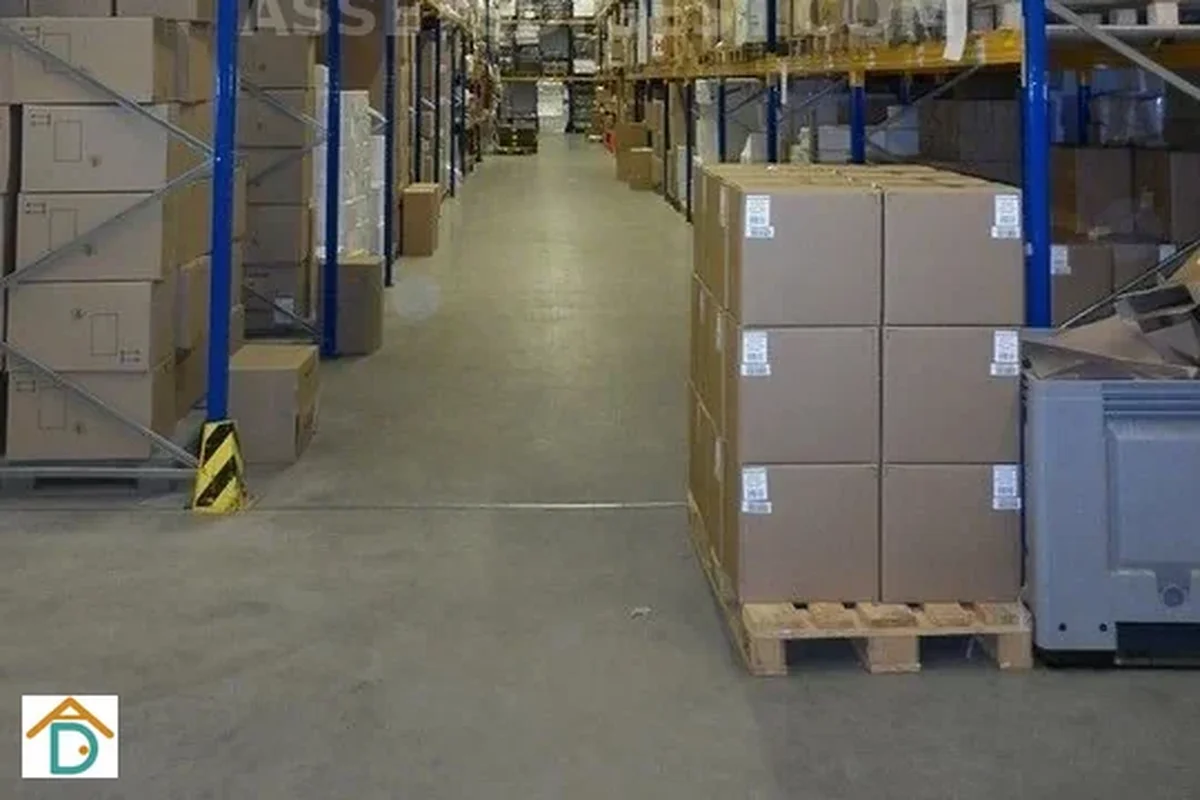
Three weeks after moving into your flatted factory unit, the pattern is clear. Every morning at around 9:30, the logistics provider for your inbound raw materials arrives, and the shared loading bay is occupied by the tenant on the fourth floor finishing a late shift. The truck waits. The driver calls. You call building management. The slot system says the bay is yours, but enforcement depends on who gets there first. By the time the bay clears, the afternoon dispatch pickup has already flagged a late window with your customer.
This is not a worst-case scenario. It is a common outcome of signing a lease in a flatted factory without understanding how the shared loading bay model actually operates. The bay is where your operation meets the supply chain. Every inbound ingredient, every outbound order, every return or exchange passes through it. In industrial leasing, the configuration of that interface, shared with other tenants or dedicated to your unit, shapes your daily operational rhythm in ways that are easy to underestimate during a property search.
A shared loading bay means your deliveries share a common area with other tenants. A dedicated bay means your truck has its own position, its own door, and its own schedule. The difference sounds minor. In practice, it determines whether you control your delivery window or whether you are subject to a booking system, queue times, and the behaviour of tenants you have never met.
This article is for operators in multi-tenant industrial buildings who need to understand how loading bay arrangements actually work, what constraints they create, and what to verify before committing to a specific unit.
Shared Loading Bays: How They Work
In a flatted factory or multi-storey industrial building with shared loading infrastructure, the ground-level loading bay is a common resource. Multiple tenants on multiple floors depend on the same bay positions for vehicle access.
The management model varies. Some buildings operate a formal booking system: tenants reserve time slots in advance, typically through the building management office or an online portal. Slots are typically 30 minutes to one hour. Overbooking is usually not permitted; arriving late forfeits the slot. Other buildings operate on a first-come-first-served basis, where the bay is open to any tenant until it is occupied.
Both models create scheduling constraints that do not exist with a dedicated bay.
Morning delivery windows are the most contested period. In many industrial estates, logistics providers run fixed routes with tight time windows. A truck that misses its slot with Tenant A because Tenant B is still occupying the bay may not return until the next scheduled run. For a business whose inbound raw materials arrive on a specific truck each morning, a blocked bay is not just an inconvenience. It is a supply chain disruption.
Building management rules typically impose restrictions beyond slot times. Common rules include time limits per vehicle (often 15–30 minutes for loading or unloading), vehicle type restrictions (some buildings exclude 20-foot or 40-foot container trucks from the shared bay), operating hours for bay use (most buildings restrict bay activity to daytime hours, with limited or no access on Sundays and public holidays), and speed and manoeuvring rules within the common area.
When a shared bay is occupied or unavailable, there is no fallback position within the same building, at least not without contacting building management and arranging an exceptional override, which is rarely a smooth process.
Dedicated Loading Bays: How They Work
A dedicated loading bay means the bay position is allocated to your specific unit. Vehicles drive to your bay, load or unload, and leave. There is no slot booking with other tenants, no queue, no waiting while another tenant’s truck occupies your access point.
Dedicated loading bays are more common in ramp-up buildings, where the bay is effectively the ramp landing at your floor level. They are also found in detached and semi-detached factory units, where the building layout naturally accommodates individual bay access for each unit.
The operational advantage is scheduling independence. You agree a delivery window with your logistics provider based on your own operational needs, not on a building-wide booking system. If your supplier runs a morning truck and an afternoon truck, both can be accommodated as long as the bay is available; there is no competing claim from another tenant.
Some dedicated bays include additional infrastructure: dock levellers, roller shutters, covered aprons, and dock seals. These features matter operationally. A dock leveller (the hinged plate that bridges the height gap between truck bed and dock floor) allows forklift and pallet jack operations without manual offloading. Without one, loading and unloading relies on ramps or bridge plates that slow the process and introduce safety risks. Roller shutters provide weather protection and security for goods staged at the bay. These are not universal features; they must be confirmed during viewing.
Dock Levellers, Roller Shutters, and Bay Infrastructure
The presence or absence of bay infrastructure affects your loading efficiency directly.
A dock leveller is essential for operations that rely on forklift or pallet jack discharge. The height difference between a standard truck bed and a loading dock floor is too large for safe and efficient manual pallet movement. Without a leveller, you need a loading dock that is specifically designed for the truck types you use, which limits your logistics provider options.
Roller shutters at the bay serve two functions: security and weather protection. An open bay with goods staged on the loading apron is exposed to rain, heat, and unauthorised access. In a secure industrial estate with controlled access, this may be an acceptable risk. In a busy mixed-use estate, it is not.
Not all dedicated bays have both features. Many ramp-up units have a leveller at the ground floor bay but not at upper floor landings. Some have neither. During a viewing, ask specifically what infrastructure is present, whether it is in working order, and who is responsible for maintenance.
Assessing the Risk in Shared Bay Buildings
If you are considering a flatted factory unit with shared loading bays, the key risk to assess is scheduling predictability under your expected delivery load.
Ask the building management: how many tenants share the loading bay? What is the total number of bay positions? What is the booking system, and how far in advance do slots typically get booked? Are there time limits per vehicle, and how are breaches handled? What vehicle types are permitted in the bay area? Are there peak hours when the bay is almost always occupied?
Then cross-check against your own operation. If you receive multiple deliveries a day and each requires a bay slot, you need that bay to be accessible at those times. If the booking system shows the bay is frequently booked during your required windows, your operation has a scheduling problem that cannot be solved without finding an alternative.
Visit the building during a typical morning delivery window if possible. Observe how many trucks are waiting, how long each takes, and whether the bay appears to operate smoothly or at capacity. A building that looks orderly in the property photos may reveal queuing problems when you see it during actual operations.
Questions to Ask Before Signing
Before the LOI is signed, the following should be confirmed in writing:
- Is the loading bay shared or dedicated to this unit?
- How many tenants share the bay, and how many bay positions exist?
- What is the booking system: formal slots, first-come-first-served, or hybrid?
- What are the permitted operating hours for bay use?
- What vehicle types and dimensions can the bay accommodate?
- Is there a dock leveller? What is its capacity?
- Is there a roller shutter or other weather protection?
- Are there usage fees or service charges specific to bay access?
- What happens if another tenant’s vehicle blocks your access?
These questions take 20 minutes to ask. The answers reveal operational constraints that a lease signed without this information cannot easily resolve.
Summary: Loading Bay Model Shapes Operational Reality
The shared versus dedicated distinction is not just about convenience. It determines whether your logistics operation runs on your schedule or on a building-wide system you share with other tenants.
Shared bays work well for businesses with moderate delivery frequency, flexible scheduling windows, and lightweight cargo that loads and unloads quickly. They fail for operations that run multiple daily truck visits, depend on precise time windows from logistics providers, or handle cargo that requires extended bay time.
Dedicated bays remove the scheduling uncertainty but come with the rent and unit size requirements of the buildings that typically offer them. If your operation genuinely needs a dedicated bay, budget for the ramp-up or detached factory context that provides it.
Related articles:
- Ramp-Up vs Flatted Factory: the building type context that determines bay model
- Turning Radius and Container Access: vehicle geometry at the bay
- Noise and Odour Neighbour Sensitivity: other shared-infrastructure dynamics in multi-tenant buildings
References
[1] JTC Corporation — Industrial Space Listings. https://www.jtc.gov.sg/find-space/
[2] BCA — Building Control (Loading Dock Standards). https://www1.bca.gov.sg/safety-and-standards/building-control-act/
[3] URA — Master Plan (Zoning for Industrial Logistics). https://www.ura.gov.sg/Corporate/Planning/Master-Plan
[4] LTA — Vehicle Dimensions and Road Access Regulations. https://www.lta.gov.sg/
[5] BCA — Warehouse and Logistics Building Standards. https://www1.bca.gov.sg/safety-and-standards/building-control-act/
[6] NEA — Environmental Public Health (Noise and Odour from Loading Activities). https://www.nea.gov.sg/our-services/pest-control/