

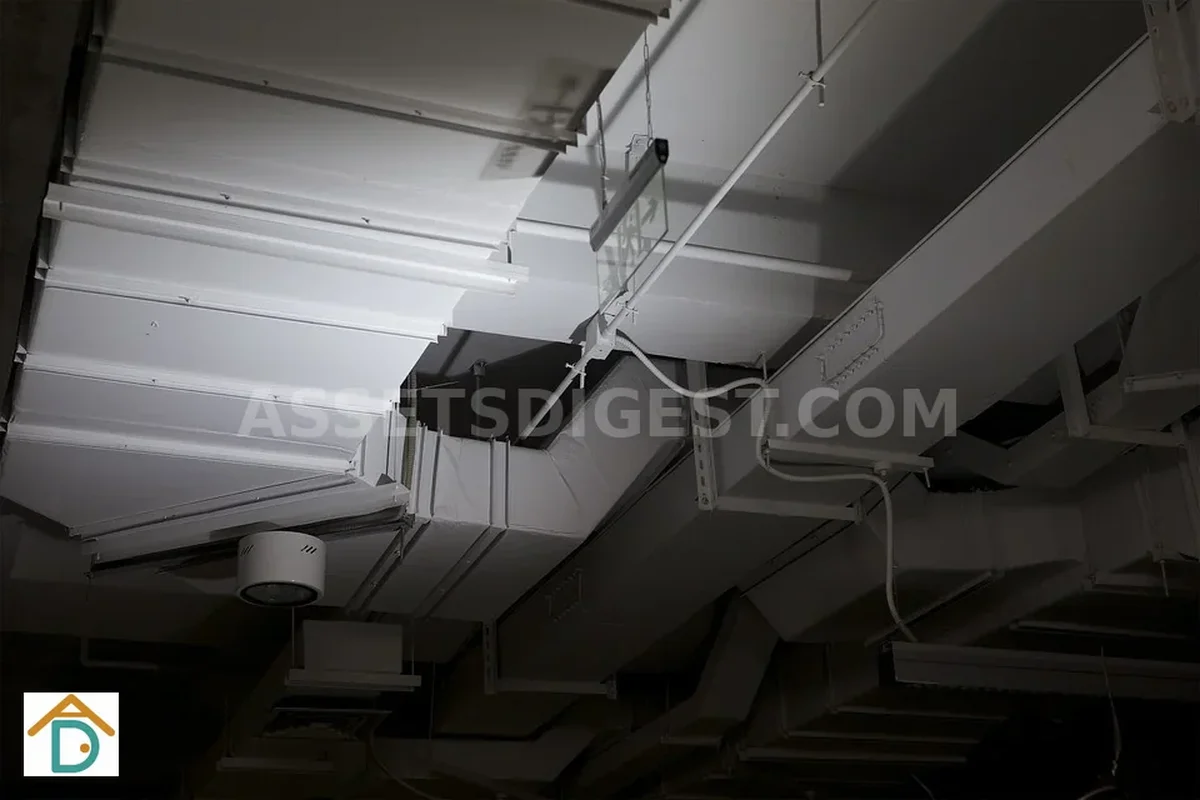
Getting exhaust and ventilation wrong in an industrial unit is one of the most expensive mistakes a tenant can make. The cost of retrofitting an exhaust system after a lease is signed, when the building’s rules, shaft capacity, or structural provisions were not confirmed beforehand, can easily reach tens of thousands of dollars. In the worst cases, the problem is not fixable within the unit, and the tenant is locked into a space that cannot support their operations.
The rules are also more complex than most tenants expect. NEA regulates air emissions and discharge standards. SCDF requires fire dampers on ductwork that penetrates fire-rated walls or floors. Building management sets rules on duct routing, maximum duct sizes, and approved discharge points, and these rules are enforceable even when not explicitly written into the tenancy agreement. PUB regulates grease traps for food production operations.
This guide explains what you need, what to check, and what to avoid before committing to a unit.
Types of Industrial Exhaust Systems
Kitchen and cooking exhaust captures grease, smoke, and heat from cooking operations. These systems require grease filters at the hood, fire dampers where ducts penetrate fire-rated elements, and duct routing that terminates at roof level away from air intakes. NEA and SCDF both have specific requirements for this type. This is typically the most complex and costly exhaust system to install.
Fume exhaust removes chemical fumes, solvent vapours, and welding smoke. Appropriate filtration (activated carbon, chemical scrubbers, or other media) must match the contaminant type. Discharge must meet NEA air quality standards.
Dust extraction handles airborne particles from woodworking, grinding, or sanding operations. Cyclone separators or bag filters are standard. Discharge height and location must comply with NEA requirements.
General ventilation supplies fresh air circulation but is not a substitute for process-specific extraction. Using general ventilation to address fumes, dust, or grease from industrial processes is a common and costly mistake.
The key point: match the system type to your actual emissions. A general ventilation fan will not solve a grease or chemical fume problem.
Regulatory Requirements
NEA regulates air emissions and discharge standards. Any exhaust discharge that affects air quality requires NEA compliance. This is not optional and NEA can enforce against odour complaints from neighbouring premises.
SCDF requires fire dampers on ductwork that penetrates fire-rated walls, floors, or compartments. Grease ducts in particular require fire-rated construction and access panels for cleaning. SCDF approval is required before installation for certain exhaust types.
Building management sets rules on duct routing, maximum duct sizes, and approved discharge points. These rules vary significantly between buildings and are enforceable even when not explicitly stated in the tenancy agreement. Always check with building management before designing your system.
PUB requires grease traps for food production operations discharging trade effluent. Sizing must match the volume and type of discharge.
Exhaust System Design: Key Considerations
Airflow capacity must be sized for the equipment and the room volume. Undersized systems fail to capture contaminants at source. Oversized systems waste energy and generate excessive noise.
Duct routing should follow the shortest practical path. Each bend reduces exhaust efficiency: every 90-degree bend is equivalent to approximately 3–5 metres of straight duct in pressure loss.
Filtration and treatment must match the emission type. Grease-laden exhaust requires grease filters and regular cleaning. Chemical fumes require appropriate chemical filtration. Using the wrong filter type results in rapid clogging or, worse, fire risk.
Discharge location must be away from neighbour air intakes, windows, and common areas. NEA sets minimum discharge heights above roof level.
Make-up air provision is required for all exhaust systems. Without incoming air replacing what the exhaust removes, negative pressure develops, performance drops, and backdrafting can occur. See the make-up air explainer for details.
Common Mistakes
Installing exhaust without checking building management rules first leads to rejected applications, removal orders, or forced re-routing mid-fit-out. This is the most common and most avoidable mistake.
Undersizing the system based on equipment nameplate ratings rather than actual operational load is common. Equipment running continuously or under high load draws more exhaust than a simple sum of rated power suggests.
Forgetting make-up air is the single most frequent cause of exhaust system underperformance. The fan can only move air. If no replacement air enters, the system stalls regardless of fan capacity.
Using general ventilation instead of specific extraction for process contaminants results in poor indoor air quality and potential NEA enforcement.
Skipping filter maintenance allows grease and particulate accumulation, creating fire hazards and reducing airflow.
Assuming the previous tenant’s exhaust system is adequate for different operations is risky. Different processes have different airflow, filtration, and discharge requirements.
Cost Drivers
Number of floors the duct must traverse: more floors means higher installation cost and more complex fire damper requirements. Duct material: galvanised steel is standard; stainless steel is required for some cooking and chemical applications and costs more. Filtration equipment: basic grease filters are cheaper than electrostatic precipitators or chemical scrubbers. Fan type and power: larger, quieter fans cost more. Fire dampers and fire-rated ductwork sections driven by SCDF requirements add cost. Installation complexity (access constraints, structural supports for external ducts) also affects the final cost.
Summary
Exhaust and ventilation compliance involves NEA for air emissions, SCDF for fire safety in duct routing, building management for building-specific rules, and PUB for trade effluent. System design must account for airflow capacity, duct routing efficiency, appropriate filtration, discharge location, and make-up air. Common failures include undersizing, missing make-up air, inadequate filtration, and installing without building approval. Confirm building rules and shaft feasibility before committing to a unit.
For more detail on make-up air, rooftop duct routing constraints, noise control, grease duct maintenance, and the exhaust system viewing checklist, see the supporting posts in this series: Make-Up Air Explained, Rooftop Duct Routing, Noise Control Basics, Grease Duct Maintenance, and Viewing Checklist: Exhaust System Condition.
For SCDF fire safety obligations, see SCDF Fire Safety Basics.
For power capacity considerations that affect equipment selection, see Power Capacity & Utilities.
References
[1] NEA: Air Pollution Control — Exhaust and Emissions. https://www.nea.gov.sg/our-services/pollution-control [2] NEA: Odour Management. https://www.nea.gov.sg/our-services/pollution-control/ [3] SCDF: Acts, Codes & Regulations (Fire Safety). https://www.scdf.gov.sg/fire-safety-services-listing/downloads/acts-codes-and-regulations [4] SCDF: Fire Safety (Buildings) Regulations. https://www.scdf.gov.sg/fire-safety-services-listing/downloads/acts-codes-and-regulations [5] PUB: Trade Effluent Regulations. https://www.pub.gov.sg [6] MOM: Workplace Safety & Health. https://www.mom.gov.sg/workplace-safety-and-health [7] BCA: Building Plan Submission. https://www1.bca.gov.sg/safety-and-standards/building-control-act/ [8] JTC: Industrial Space. https://www.jtc.gov.sg/find-space/