

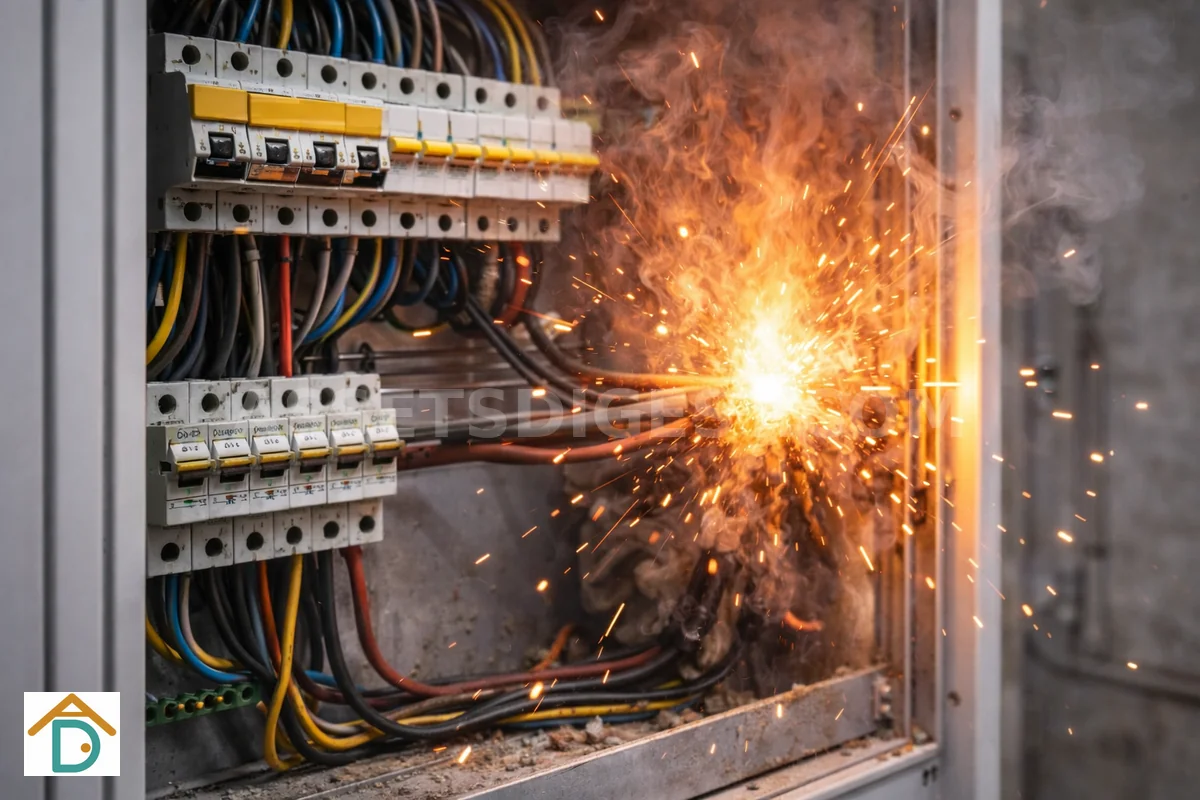
Two identical 2,000 sq ft industrial units in the same building can have vastly different fire safety requirements. The building doesn’t explain the gap. The fire load does. One unit, configured for light office use, may face no additional requirements. The other, fitted out for food production with cold storage and palletised packaging, may trigger sprinkler upgrades, fire-rated storage cabinets, and quantity limits on flammable materials. Understanding fire load lets you anticipate these requirements before you sign the lease, not after the SCDF officer arrives.
This post is for industrial tenants designing their unit layout and storage zones, operators determining equipment and inventory placement, and anyone coordinating a fit-out where fire safety considerations need to be factored in early. If you are planning what goes into your unit (machines, materials, storage configuration), this guide helps you understand how fire load affects the outcome.
Fire load is the total energy that would be released if everything combustible in your unit caught fire, measured in megajoules per square metre (MJ/m²). The higher the fire load, the greater the fire risk and the stricter the SCDF requirements for the space.
Every industrial building and unit is designed with a fire load capacity: the maximum fire load it was built to handle. If your operations push fire load beyond that capacity, you either need to reduce the fire load or install additional fire protection measures.
What Contributes to Fire Load
Packaging materials (carton boxes, bubble wrap, shrink wrap, and pallets) often accumulate to levels that surprise operators. Even units that appear clean and empty can carry significant fire load from accumulated packaging. Finished goods add to the total depending on what you produce. Furniture and fixtures such as wooden shelving, fabric partitions, and carpet contribute. Some equipment contains oils, solvents, or plastic components that also add to the fire load.
Raw materials and work-in-progress inventory contribute. Storage racks and pallets, particularly wooden pallets, add substantially. Any flammable liquids or gases on-site, even in small quantities, affect the calculation. Flooring, wall panels, and ceiling tiles also have fire ratings that factor into the overall assessment.
The practical takeaway: fire load is not just about what you manufacture. It is about everything that burns inside your unit.
How Fire Load Affects Your Requirements
B2 spaces typically have higher designed fire load capacity than B1 spaces because they are built for heavier industrial activities. Storage-intensive operations generally have higher fire load than production operations.
When operations push fire load beyond what the building was designed for, additional fire protection measures are required. SCDF may require additional sprinkler coverage, fire-rated storage cabinets, or quantity limits on specific materials. Fire load also influences extinguisher type and quantity requirements, affects fire compartment sizing and separation, and may require additional fire-rated construction. Insurance premiums are also affected: higher fire load typically means higher premiums.
A tenant increasing storage, adding equipment with combustible components, or changing the nature of stored materials may trigger a fire load review even without structural changes.
How Fire Load Is Estimated
A professional fire load assessment is conducted by a QP who surveys your unit and calculates based on the materials present, their quantities, and published calorific values. The QP produces a fire load survey report that becomes part of the SCDF submission.
A simplified method for your own awareness involves listing all combustible materials, estimating their quantities, multiplying by published calorific values, and dividing by the floor area. The professional assessment is more accurate and is what SCDF requires for formal submissions.
Practical Implications for Your Layout
Maximise vertical storage but stay within rated limits. Higher racking brings items closer to sprinklers and can change the distribution of water required. Keep combustible materials away from heat sources and from each other. Zone high-fire-load areas separately where possible: a dedicated storage room with fire-rated walls is preferable to dispersing flammable materials throughout the unit.
Consider fire-rated partitions for storage zones within the unit. Work with your QP to optimise layout before finalising your fit-out plan. It is far cheaper to move walls on paper than to remediate after SCDF flags non-compliance.
Controlling Fire Load
Do not stockpile combustible materials beyond operational needs. Use metal or fire-rated shelving instead of wooden racks where possible. Store chemicals in approved fire-rated cabinets. Keep packaging waste areas small and clear them regularly. Maintain clear zones around fire protection equipment: sprinklers, hose reels, and fire extinguishers must have unobstructed coverage.
What Happens If You Exceed the Limits
SCDF inspection finding non-compliance leads to enforcement action. Required steps are reducing materials, installing additional fire protection, or changing storage methods. Stop-work orders, fines, and premises closure are possible outcomes for persistent non-compliance.
Changes to stored materials or equipment may require re-assessment. If your operations change (a new product line, more storage volume, a different mix of materials on-site), a fresh fire load calculation may be needed.
Quick Reference Checklist
- List all combustible materials in your unit: raw materials, packaging, finished goods, furniture, equipment components
- Estimate quantities and storage heights: fire load is not just about what you store but how densely
- Discuss layout with a QP before committing to a fit-out plan
- Zone high-load areas separately: use fire-rated construction where possible
- Plan for future changes: any material change may trigger re-assessment
- Factor fire load into your insurance planning: higher fire load affects premiums
- Confirm the unit’s designed fire load capacity with building management before signing
Summary
Fire load is the total combustible content of a unit measured in MJ/m². It constrains what can be stored and what operations can be conducted. B2 spaces generally tolerate higher fire load than B1. Control measures include minimising stockpiling, using fire-rated shelving, proper chemical storage, and keeping clear zones around fire equipment. Exceeding limits triggers SCDF enforcement.
Before starting any fit-out that will add combustible materials, storage capacity, or equipment with flammable components, work through the Compliance Pre-Renovation Checklist to confirm which SCDF and URA gates apply to your scope.
For the full SCDF fire safety overview, see SCDF Fire Safety Basics.
For when renovation triggers fire submissions, see When Renovation Triggers Fire Submission.
For fire equipment checks during viewing, see Sprinklers / Hose Reels / Exit Signs: What to Check On-Site.
For tenant vs landlord responsibilities, see Tenant Responsibilities vs Landlord Responsibilities.
For the fire safety FAQ, see Fire Safety Q&A.
References
[1] SCDF: Acts, Codes & Regulations (Fire Safety). https://www.scdf.gov.sg/fire-safety-services-listing/downloads/acts-codes-and-regulations [2] SCDF: Fire Safety (Buildings) Regulations. https://www.scdf.gov.sg/fire-safety-services-listing/downloads/acts-codes-and-regulations [3] SCDF: Fire Safety Management. https://www.scdf.gov.sg/fire-safety-services-listing/permits-and-certifications/fire-safety-manager [4] NFPA: Fire Load Survey Methodology (reference standard). https://www.nfpa.org [5] MOM: Workplace Safety & Health. https://www.mom.gov.sg/workplace-safety-and-health [6] URA: Enquiry on Approved Use of Premises. https://eservice.ura.gov.sg/EnquiryOnApprovedUse/ [7] JTC: Industrial Space. https://www.jtc.gov.sg/find-space/