

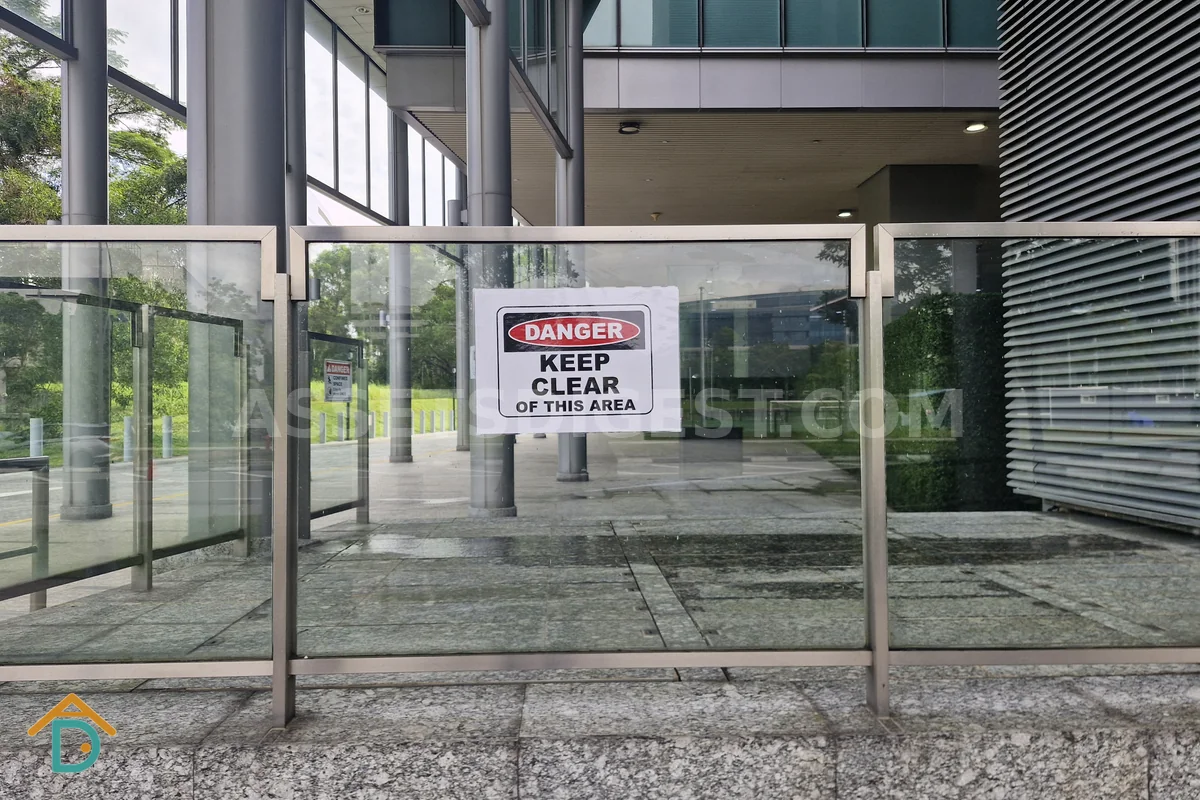
More renovation work triggers SCDF fire safety submissions than most tenants expect. A common misconception is that only major renovations (structural changes, new construction) require approval. The reality is that work affecting fire compartmentation, escape routes, fire load, or fire systems, regardless of scale, can trigger mandatory submissions. Skipping required submissions has serious consequences: stop-work orders, fines, and mandatory remediation before the space can be occupied.
This post walks through what almost always triggers a submission, what usually does not, the grey zones to watch for, and how to confirm your situation before you start.
Renovations That Almost Always Trigger Submission
Erecting or demolishing partitions or non-structural walls can affect fire compartmentation. Even if the wall is not a structural element, it may form part of a fire-rated assembly. Modifying a mezzanine or raised platform changes escape route geometry and the fire compartment volume, which SCDF reviews. Adding a new room or enclosed space, such as a cold room, server room, or office enclosure, creates a new fire risk zone that must be assessed. Work involving the fire alarm system, sprinklers, or emergency lighting directly affects fire protection systems and always requires SCDF sign-off. Installing cooking equipment or industrial heating equipment introduces ignition sources into the space and changes the fire risk profile. Creating new openings in walls or floors, for ducting, conveyors, or other services, can compromise fire-rated compartmentation.
Renovations That Usually Do Not Trigger Submission
Like-for-like replacement of finishes using materials of equal or better fire rating generally does not trigger submission. Replacing a tile floor with another tile floor, or repainting with a fire-rated paint, is typically outside SCDF scope. Furniture and shelving placement does not trigger submission unless it blocks escape routes or covers fire equipment. Equipment installation without structural or fire system changes is typically excluded. Minor electrical work such as adding power points does not trigger submission unless it involves the fire alarm circuit.
Grey Zones
Exhaust duct installation may trigger submission if the duct penetrates a fire-rated wall or floor. The penetration point creates a hole in the fire-rated assembly that must be fire-stopped to SCDF requirements. Air-conditioning installation is usually fine but becomes an SCDF issue if it modifies fire-rated ceilings or creates new penetrations in fire-rated elements. Signage and fixtures are normally safe but become a compliance issue if they obstruct exit signs or fire equipment. Obstruction is a direct fire safety violation even without any structural change.
How to Confirm Before You Start
Ask your renovation contractor, but do not rely solely on their judgment. Contractors focus on getting the work done; fire safety compliance is not always their primary concern. Engage a fire safety QP for a pre-renovation assessment: the cost is modest compared to the cost of a stop-work order or forced remediation. Check with building management: the building’s fire safety records may already be on file and can confirm whether a submission is required for your scope of work.
Summary
SCDF fire safety submissions are triggered by work affecting compartmentation, escape routes, fire load, and fire protection systems. Common triggers include partition changes, mezzanines, room additions, fire system work, cooking equipment installation, and new wall openings. Grey areas include exhaust duct routing, AC installation, and signage placement. Confirm whether a submission is required before starting any renovation by engaging a QP or consulting building management.
For the full SCDF fire safety overview, see SCDF Fire Safety Basics.
For fire load basics, see Fire Load Basics.
For fire equipment checks during viewing, see Sprinklers / Hose Reels / Exit Signs: What to Check On-Site.
For tenant vs landlord responsibilities, see Tenant Responsibilities vs Landlord Responsibilities.
For the fire safety FAQ, see Fire Safety Q&A.
References
[1] SCDF: Acts, Codes & Regulations (Fire Safety). https://www.scdf.gov.sg/fire-safety-services-listing/downloads/acts-codes-and-regulations [2] SCDF: Qualified Persons (Architects & Engineers). https://www.scdf.gov.sg/home/fire-safety/downloads [3] SCDF: Fire Safety (Buildings) Regulations. https://www.scdf.gov.sg/fire-safety-services-listing/downloads/acts-codes-and-regulations [4] SCDF: Fire Safety Management. https://www.scdf.gov.sg/fire-safety-services-listing/permits-and-certifications/fire-safety-manager [5] BCA: Building Plan Submission. https://www1.bca.gov.sg/safety-and-standards/building-control-act/ [6] BCA: Building Control Act. https://www1.bca.gov.sg/safety-and-standards/building-control-act/ [7] MOM: Workplace Safety & Health. https://www.mom.gov.sg/workplace-safety-and-health [8] URA: Enquiry on Approved Use of Premises. https://eservice.ura.gov.sg/EnquiryOnApprovedUse/