

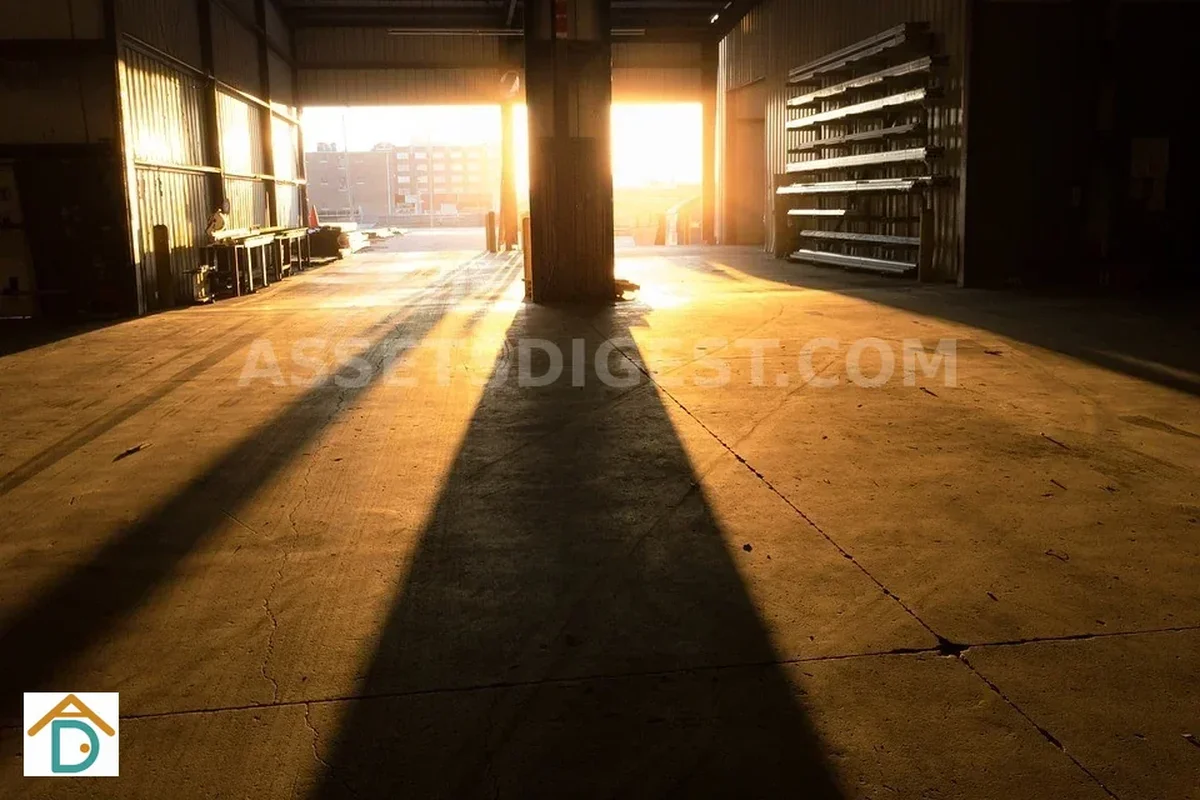
In multi-tenant flatted factories, loading bays are shared infrastructure. The scheduling system and access arrangements directly affect how tenants manage deliveries, dispatch, and operational logistics. Understanding these constraints before signing a lease prevents disruptions to daily operations that a viewing may not reveal.
By the end of this guide, you will understand how shared loading bays work, how to assess their impact on your operations, and what questions to ask during viewings. For operations depending on frequent loading and unloading, this understanding also helps you decide whether to prioritise Ramp-Up buildings or ground-floor units.
How shared scheduling works
Building loading bay management varies by property. Some buildings operate a formal booking system (online portals, phone reservations, or sign-up sheets) where tenants reserve time slots in advance. Others operate on a first-come-first-served basis with no formal allocation. Typical time slots are 30 to 60 minutes per booking. Operating hours for loading bay access are typically 7am to 7pm on weekdays, with some buildings applying restrictions during lunch hours or certain days.
Peak periods (typically 8 to 10am and 2 to 4pm) are when demand for bay time is highest and availability is most constrained. Tenants with time-sensitive deliveries or perishable goods are most affected by peak-period congestion.
Operational impact
Delivery timing is not fully within the tenant’s control when the loading bay is shared. Scheduling a delivery at a specific time does not guarantee the bay will be available: a preceding tenant may over-run their slot, or no slot may be available during the desired window.
Outgoing shipments must align with bay availability. Missing a booked slot (due to vehicle delay, customs clearance for imported goods, or picker productivity issues) may mean waiting for the next available opening or rescheduling the collection.
For operations handling perishable goods, bay scheduling constraints affect cold chain management and the window available for loading before product temperature integrity is compromised.
Staff scheduling must account for assigned bay windows. Workers and equipment need to be ready when the bay is available, not the other way around.
Managing the constraint
Book loading bay slots as far in advance as the building’s system allows. Many buildings allow weekly or bi-weekly advance booking once the tenant has established an account. Coordinate with key suppliers on the building’s scheduling rules. Suppliers who regularly deliver to the estate may already have an account and familiarity with the system.
Stagger incoming and outgoing loads where possible to reduce dependence on a single time window. Building buffer inventory for key raw materials reduces vulnerability to missed slots or last-minute unavailability.
For high-volume operations that rely on frequent heavy loading, consider prioritizing ramp-up or ground-floor units where direct vehicle access may reduce or eliminate dependence on the shared bay.
Questions to ask during viewing
Ask about the specific scheduling system in use, how many tenants share the loading bay, the operating hours and any restrictions, whether recurring or peak-period slots are consistently available for the volumes required, how peak hour conflicts are managed, and what alternatives exist for after-hours or overflow loading.
Summary
Shared loading bay scheduling is an operational constraint in multi-tenant flatted factories that affects delivery timing, dispatch planning, and staff scheduling. Buildings operate booking systems or first-come-first-served arrangements with typical operating hours of 7am to 7pm on weekdays. Managing the constraint requires advance booking, supplier coordination, load staggering, and buffer inventory. For operations with high loading volumes, ramp-up units or ground-floor access may eliminate or reduce reliance on shared bay scheduling.
For loading bay considerations alongside other viewing checks, see the full viewing checklist.
For understanding loading bay scheduling costs in the context of total occupancy cost, see the hidden costs guide.
For zoning and use eligibility before committing to a unit, see the B1 vs B2 zoning guide.
References
[1] JTC — Industrial building management. https://www.jtc.gov.sg/find-space/
[2] LTA — Heavy vehicle and logistics regulations. https://www.lta.gov.sg/
[3] BCA — Building Control. https://www1.bca.gov.sg/safety-and-standards/building-control-act/
[4] SCDF — Fire Code 2023. https://www.scdf.gov.sg/fire-safety-services-listing/fire-code-2023/table-of-content
[5] URA — Planning and development control. https://www.ura.gov.sg/Corporate/Guidelines/Development-Control
[6] NEA — Environmental protection. https://www.nea.gov.sg/our-services/pollution-control/