

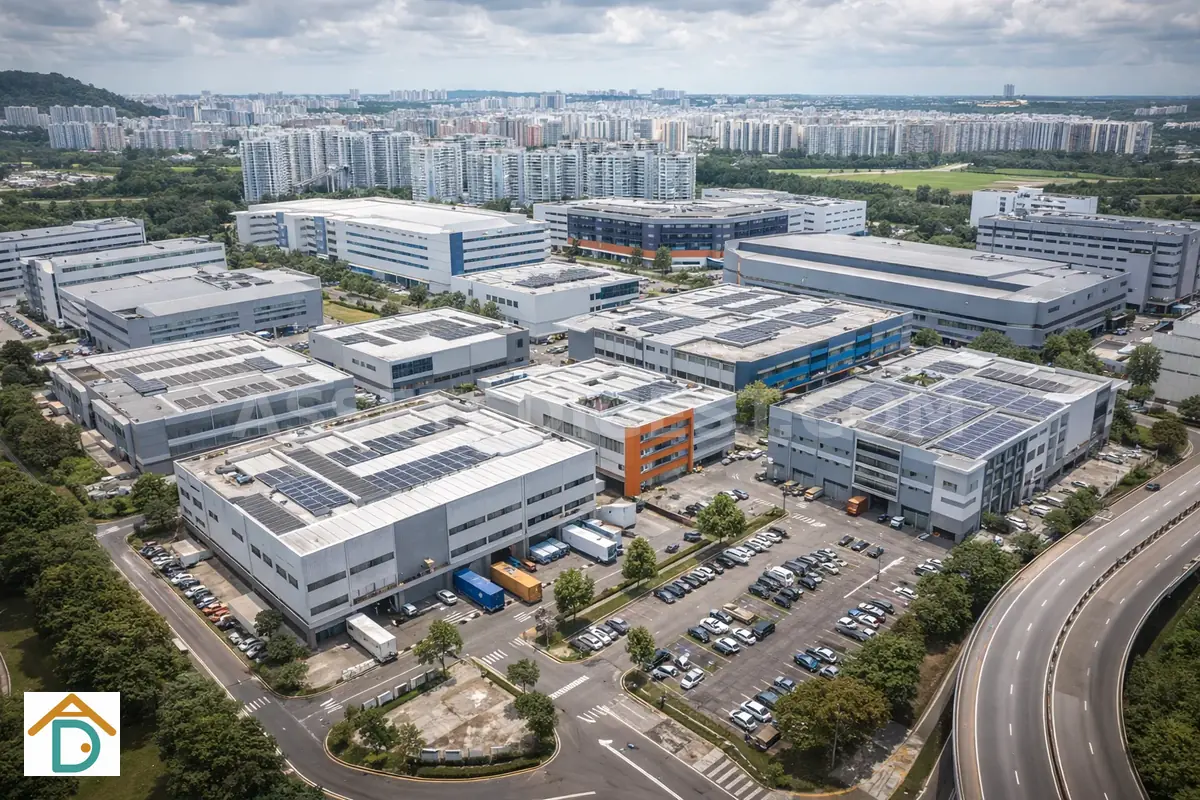
A lot of tenants make the same mistake when they start searching for industrial space in Singapore. They see a unit listed as “industrial,” assume that means most factory or production uses should be fine, and move ahead with negotiations.
Then the problem appears later.
Maybe it is a food business that needs stronger exhaust and waste handling. Maybe it is a workshop using machinery that creates more noise and vibration than expected. Maybe it is a printing or fabrication setup that looks manageable on paper, until someone checks the actual emissions, chemicals, or fire load involved. By then, the tenant realises the unit is approved for B1 use, but their operations really belong in B2.
That kind of mistake is expensive. It can delay handover, hold up renovation works, create problems with the landlord, trigger compliance issues, or force a business to relocate after already spending money on fit-out.
That is why understanding B1 vs B2 Singapore is not just a technical planning issue. It affects whether your business can legally operate in the space, whether your unit can support your actual requirements, the approvals required, and what sort of building or neighbour expectations you will be dealing with.
This guide is written for business owners leasing industrial space for the first time, operators relocating and trying to confirm whether their activity fits a new unit, landlords figuring out what tenant types they can market to, and property managers trying to keep a multi-tenant building compliant.
You will get a clear explanation of what B1 and B2 actually mean, how they differ in real leasing situations, what to watch for when it comes to emissions, noise, fire load, and grey-zone uses, and how to verify your activity before you commit.
What Does B1 Mean in Singapore?
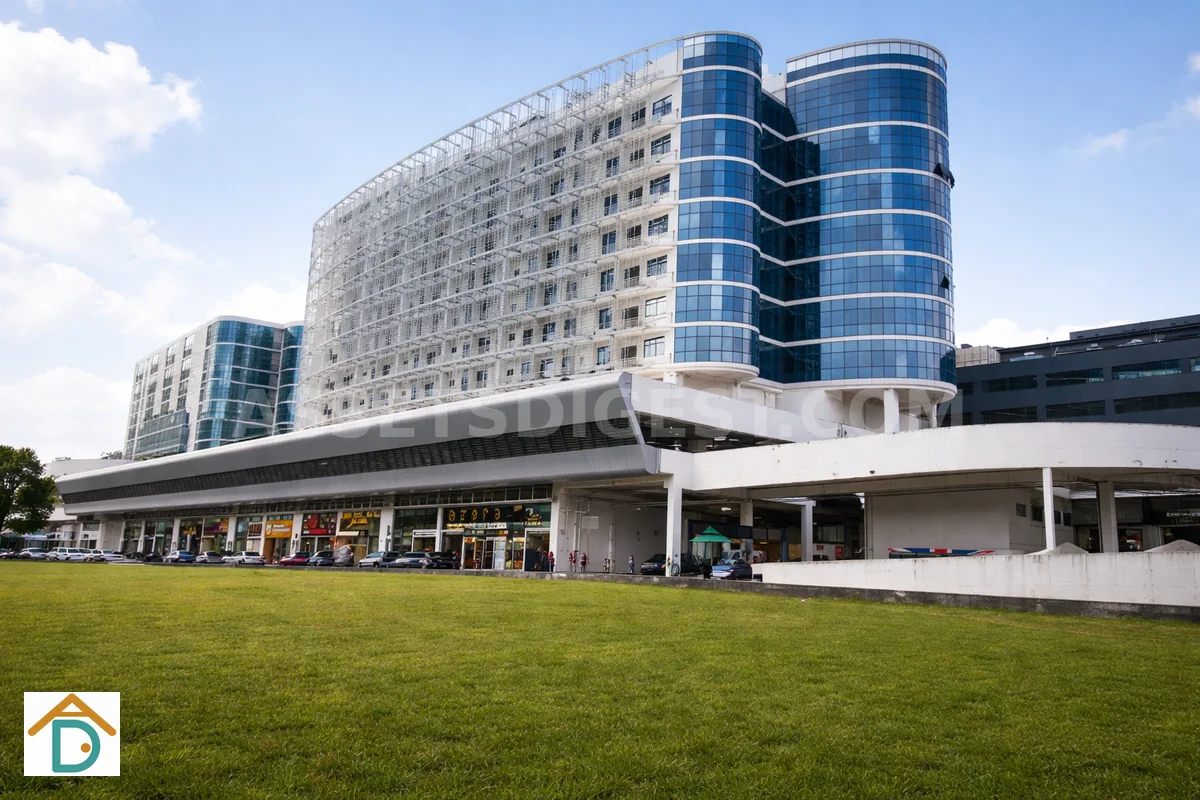
B1 is commonly described as light industrial use, but that label can be a bit misleading if you take it too literally.
In simple terms, B1 industrial space Singapore is meant for cleaner, lower-impact industrial activities that can operate without causing significant nuisance to nearby occupiers or more sensitive surrounding uses. The classification is not based on how big your business is or how many employees you have. It is based on operational impact.
So a company can be fairly sizeable and still fit B1, as long as the work it does remains relatively clean and controlled. At the same time, a small business can fall outside B1 if its operations involve strong odour, heavy exhaust, vibration, hazardous materials, or process waste.
Typical B1 uses include light assembly, packaging, some forms of clean manufacturing, electronics-related work, testing, certain lab-based functions, and selected food or printing activities where the process remains low impact.
In terms of property type, B1 units are often found in flatted factories, cleaner industrial buildings, or business-park-style developments with a stronger office-industrial feel. These buildings typically have better finishes, passenger lifts, neater common areas, and a more polished working environment overall.
The basic idea is this: B1 is for industrial activity that can coexist with a cleaner and more sensitive industrial setting.
What Does B2 Mean in Singapore?
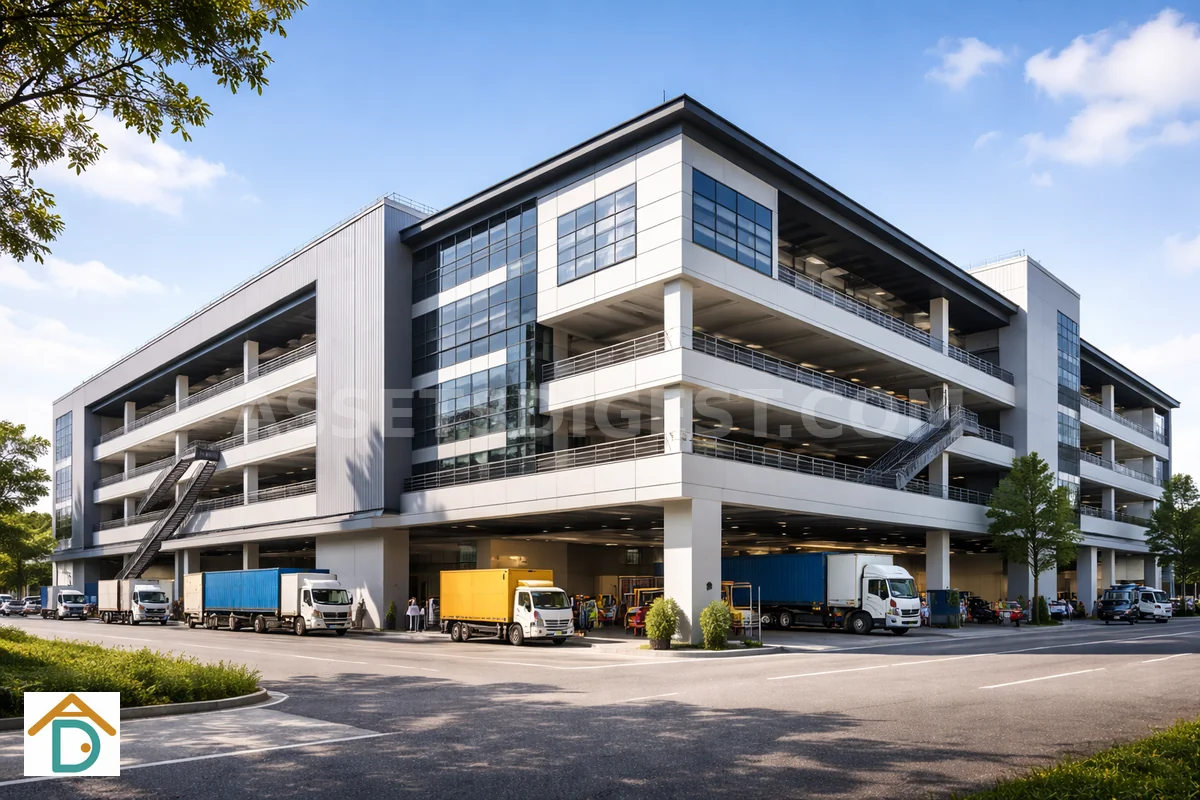
B2 refers to general industrial use, and this is where heavier operations usually sit.
B2 industrial zoning is intended for industrial activities that may create more environmental impact, require more separation from sensitive uses, involve heavier machinery, or need more specialised infrastructure. Once again, the focus is not company size. It is the nature of the operation.
Typical B2 uses include heavier manufacturing, engineering works, metal fabrication, chemical-related processing, larger-scale food production, waste-related operations, and activities involving stronger emissions, more intensive machinery, or higher hazard levels.
B2 buildings are commonly found in more dedicated industrial clusters such as Tuas, Jurong Industrial Estate, and Sungei Kadut, where land use planning is designed to support more intensive industrial activity. Compared with B1 buildings, B2 properties are often more practical in layout and more industrial in feel. You typically see ramp-up factories, detached factories, larger loading areas, higher floor loading, crane support, heavier-duty services, and more flexibility for serious industrial operations.
That said, B2 does not mean “anything goes.” A B2 building may still be subject to environmental controls, fire safety restrictions, hazardous storage limits, and building-specific management conditions. It simply means the planning context is more suitable for general industrial use than B1.
B1 vs B2 Singapore: The Main Difference
If you want the simplest way to understand it, here it is: B1 is for cleaner, lower-impact industrial operations, while B2 is for heavier, higher-impact industrial activities.
The difference is not based on company size, headcount, or how “serious” the business looks from the outside. What matters is the actual operational impact of the activity, including noise, vibration, fumes, odour, waste, hazards, and the type of building support needed.
Here’s a side-by-side comparison:
| Factor | B1 (Light Industrial) | B2 (General Industrial) |
|---|---|---|
| Main purpose | Cleaner, lighter industrial activities | Heavier, higher-impact industrial activities |
| Operational impact | Low-impact, with minimal nuisance to neighbours | Higher-impact, with more tolerance for industrial effects |
| Typical uses | Light assembly, packaging, clean manufacturing, testing, some lab uses, selected low-impact food production | Heavy manufacturing, metal fabrication, engineering works, larger-scale food production, chemical-related processing, waste-related activities |
| Noise level | Must remain relatively low and not disturb nearby occupiers | Higher tolerance, though still subject to control and compliance |
| Emissions and odour | Expected to be negligible or tightly controlled | May involve stronger emissions or odour, subject to approvals and controls |
| Vibration | Should not create nuisance for surrounding units | More tolerance for machinery-related vibration, depending on setup |
| Hazard and fire load | Usually lower-risk operations with more limited tolerance for hazardous materials | Better suited for operations involving higher fire load, industrial processes, or controlled hazardous materials |
| Typical building type | Flatted factories, cleaner industrial buildings, business-park-style industrial developments | Ramp-up factories, detached factories, heavy industrial buildings, general industrial estates |
| Building specifications | Often better finishes, stronger office component, passenger lifts, lighter-duty infrastructure | More practical industrial specs such as heavier floor loading, higher power supply, larger loading access, and greater ventilation capacity |
| Typical locations | More accessible industrial estates, often closer to mixed-use or business areas | Dedicated industrial zones such as Tuas, Jurong Industrial Estate, and Sungei Kadut |
| Neighbour expectations | Higher sensitivity to smell, noise, vibration, and late-night operations | More industrial environment, though complaints and enforcement can still happen |
| Approval complexity | Usually more straightforward if the use is clearly low-impact and already aligned | Often more complex, especially where emissions, fire safety, hazardous substances, or specialist infrastructure are involved |
| Rental positioning | Often higher rent due to cleaner environment, accessibility, and broader tenant appeal | Can be lower on a psf basis in some areas, but depends heavily on location and building specs |
| Best fit for | Businesses that need industrial space but operate in a clean, controlled way | Businesses with heavier machinery, stronger process requirements, or more demanding industrial infrastructure needs |
A good rule of thumb: if your operation is clean, quiet, and broadly office-compatible, it is more likely to fit B1. If it involves heavy exhaust, strong odour, process waste, hazardous materials, or machinery that creates more noise and vibration, it is more likely to fall under B2.
Why Zoning Matters So Much in Leasing
A lot of tenants treat zoning like a planning detail to check later. In reality, it should be one of the first things you confirm.
Zoning affects whether your business can legally operate in the unit. It affects the building specifications you need. It affects renovation approvals, fire safety submissions, exhaust routing, landlord consent, and even how likely you are to face complaints after moving in.
This is also why landlords usually specify permitted use clearly in the LOI and tenancy agreement. They are protecting the building’s compliance position and trying to avoid problems that can affect other occupiers. If a tenant’s operations do not match the approved use, the risk does not stay with the tenant alone. It can create issues for the landlord, the property manager, and sometimes the wider building.
And even where a use appears technically possible, some landlords still do not want it. That can be due to insurer requirements, management policies, prior complaint history, or service limitations in the building.
So yes, zoning matters legally. But it also matters commercially and operationally.
What Happens If the Zoning Does Not Match Your Operations?
This is where mistakes get expensive.
If your activity does not fit the approved use of the unit or building, the problem typically surfaces through a fit-out submission, a complaint from neighbouring tenants, a routine inspection, a fire safety review, or an environmental check. Once that happens, the business may be required to stop the non-compliant activity, reinstate works at its own cost, or relocate.
In some cases, the lease itself is also at risk. Most industrial tenancy agreements give the landlord the right to step in if the tenant is using the premises in a way that breaches permitted use conditions or creates compliance problems.
This is why zoning mismatch is not something to “try first and sort out later.” If you get it wrong, you may be forced to unwind the problem at your own expense.
Operational Impact Determines Your Zoning Fit
B1 and B2 classification hinges on one principle: operational impact, not business scale. Clean, low-nuisance activities with minimal emissions, noise, vibration, and fire load align with B1. Heavier industrial processes, specialist infrastructure needs, or higher environmental footprint typically require B2.
Where an activity sits between these profiles, URA’s Approved Use Enquiry process provides formal confirmation before commitment. This step is especially relevant for food production, manufacturing adjacencies, workshop operations, and any use involving combustion, chemicals, or significant trade effluent.
For businesses considering a use switch or needing official approval, see the change-of-use guide.
Emissions: One of the Biggest Dealbreakers
Emissions are one of the main reasons a business that seems “small” still ends up needing B2.
This covers more than obvious smoke or chemical fumes. It can include odour, air impurities, grease-laden discharge, vapour, and trade effluent. Food-related operations often fall into this trap. Tenants often assume they are only doing light processing, but once cooking exhaust, odour, heat, washwater, or process discharge comes into the picture, the operational profile changes quickly.
For B1 use, emissions are generally expected to be negligible or tightly controlled. For B2 use, there is usually more tolerance for controlled industrial emissions, provided the proper environmental requirements are met.
Common mistakes include assuming small scale means no approvals are needed, planning low-level exhaust discharge, or overlooking the fact that food odour counts as an emission issue too.
What to Verify Before Signing
Check whether your activity falls under NEA’s industrial siting considerations. Ask the landlord for the building’s exhaust shaft details, including size, routing, discharge height, and whether there is spare capacity. If your operations involve combustion, chemicals, food production, or liquid waste, get written guidance before committing.
For NEA pollution control guidelines for industrial premises, see the NEA Industrial Siting Consultation guidance.
Noise and Vibration: A Common Source of Complaints
Noise is one of the fastest ways for an industrial tenant to run into trouble, especially in B1 buildings.
Many first-time occupiers assume that if the property is industrial, a fair amount of machinery noise should be acceptable. In practice, that is not always true. B1 buildings tend to have lower tolerance for disruptive activity, especially in multi-tenant environments where other occupiers do cleaner, quieter work.
Vibration is another issue that is often missed. A machine does not seem especially loud, but vibration can still travel through slabs, walls, and structural elements. That can affect neighbouring occupiers and trigger complaints, especially if the equipment is fixed directly to a shared floor without proper isolation.
Typical mistakes include failing to assess ambient noise during active business hours, installing equipment without vibration control, and ignoring lease clauses on nuisance or quiet enjoyment.
What to Verify Before Signing
Visit the building at different times of day. Ask the building manager whether there have been noise complaints in the past two years. Confirm whether your equipment requires fixed installation, and if it does, check whether proper vibration isolation is feasible. Review the lease terms carefully so you understand how the landlord can respond if complaints arise.
Hazards and Fire Load: Do Not Guess
If your operations involve flammables, chemicals, combustible materials, or higher fire loads, you need to be especially careful.
B2 buildings are generally more likely to be designed with heavier industrial risk in mind. B1 buildings are generally not suitable for activities involving hazardous materials, heat-intensive processes, or storage arrangements that increase fire safety concerns.
A common mistake is assuming that because the quantity of flammable material is small, it does not matter. Another is assuming that if a previous occupier stored something similar, it should be acceptable for your use too. That is risky thinking.
Fire safety issues should be checked early, not after the lease is signed and renovation works are being planned.
What to Verify Before Signing
Ask the landlord for the building’s fire safety conditions and any restrictions tied to the premises. Confirm whether your intended storage or process changes the risk profile of the unit. If hazardous substances are involved, get professional advice and do not rely on informal assumptions.
For SCDF fire safety requirements for factories, see the SCDF fire safety guide.
The Grey Zone: Activities That Could Be B1 or B2
This is where a lot of confusion happens.
Some activities can fall into either B1 or B2 depending on scale, machinery, process flow, and environmental impact. Food production is a common example. So are printing, woodworking, metalworking, certain repair uses, and some engineering operations.
Tenants often say, “But another food operator was in this building before,” or “The last occupier was doing something similar.” That is not enough. Similar does not mean identical in regulatory terms.
A packaging line with no cooking or discharge is very different from a food production setup with grease exhaust and process washwater. A clean print function is not the same as a solvent-heavy one. A small fabrication workshop can still create enough vibration or fumes to push the use into a different category.
What to Verify Before Signing
Check the approved use of the specific unit, not just the building or estate. Where the activity is borderline, submit a proper enquiry with full operational details, including machinery, materials, process steps, outputs, and waste profile.
For the Singapore industrial activity matrix, see the allowed activities guide.
Common Traps to Avoid
One of the biggest traps is assuming “light industrial” means small business. It does not. The classification is about impact, not headcount.
Another common mistake is relying on the landlord’s or agent’s verbal comments without verifying independently.
A third is checking only the broad zoning of the site but not the approved use of the specific unit.
Then there is the fit-out trap. Some tenants assume they can solve any mismatch by adding better ventilation, acoustic treatment, or consultant reports later. Sometimes that helps, but it does not change the underlying zoning or approved use position if the activity itself is unsuitable.
And of course, there is the “let’s just move in first” approach. That is one of the costliest ways to handle industrial leasing.
Checklist: What to Verify Before You Commit
Before signing an LOI or paying any deposit, make sure you check the following:
- the building’s zoning classification
- the approved use of the specific unit
- whether your exact activity fits that approval
- whether the premises can support your exhaust, power, loading, and floor-loading needs
- whether the building has restrictions based on prior complaints or management policy
- what the lease says about permitted use, nuisance, inspections, and enforcement rights
For readers who are already shortlisting units, use the viewing checklist.
For occupiers preparing internally before a move, complete the tenant readiness checklist.
Final Thoughts on B1 vs B2 Singapore
The most important thing to remember is this: B1 vs B2 Singapore is determined by operational impact, not business size.
That one point clears up most of the confusion.
If your business is clean, low-impact, and broadly compatible with a lighter industrial environment, B1 is likely the right fit. If your operations involve heavier noise, emissions, fire load, hazardous materials, or industrial infrastructure needs, B2 is likely the better match.
And if your activity sits somewhere in the middle, do not guess.
Formal verification is always cheaper than signing the wrong lease, fitting out the wrong unit, and trying to solve the problem later.
For tenants, that protects your operations and avoids unnecessary disruption. For landlords, it helps you market the property properly and avoid non-compliant occupiers. For property managers, it helps maintain a workable and defensible tenant mix.
When it comes to industrial leasing, getting the zoning right is not a minor detail. It shapes your approvals, fit-out, operating risk, rental strategy, and long-term business continuity.
Choose the right zoning first. Then choose the unit.
References
[1] URA — Business 1 (Industrial): Introduction. https://www.ura.gov.sg/Corporate/Guidelines/Development-Control/Non-Residential/B1/Introduction
[2] URA — Business 2 (Industrial): Introduction. https://www.ura.gov.sg/Corporate/Guidelines/Development-Control/Non-Residential/B2/Introduction
[3] URA — Business 1 (Industrial): Use Quantum (ancillary uses and limits). https://www.ura.gov.sg/Corporate/Guidelines/Development-Control/Non-Residential/B1/Use-Quantum
[4] NEA — Industrial Siting Consultation (ISC). https://www.nea.gov.sg/our-services/development-control/guidelines-for-building-plan-submission/industrial-siting-consultation
[5] SCDF — Fire Code 2023: Appendix 01 (Fire Safety Report). https://www.scdf.gov.sg/fire-safety-services-listing/fire-code-2023/table-of-content/appendix-01/appendix-01-fire-safety-report
[6] URA — URA maps (Master Plan / zoning lookup). https://www.ura.gov.sg/maps/
[7] URA eService — Enquiry on Approved Use of Premises. https://eservice.ura.gov.sg/EnquiryOnApprovedUse/
[8] GoBusiness — URA: Change of Use Approval (application pathway and requirements). https://licensing.gobusiness.gov.sg/licence-directory/ura/change-of-use-approval