

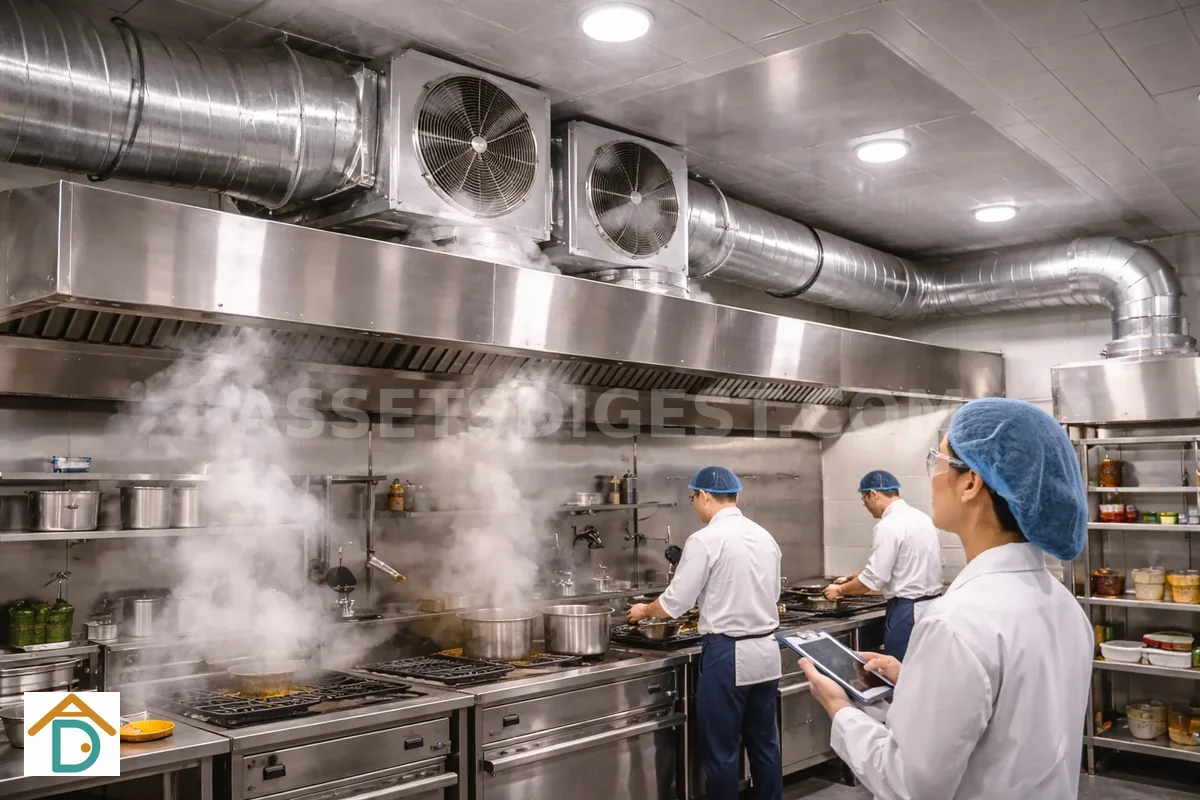
Most tenants start by asking whether a unit can be licensed for food use.
But for cloud kitchens and central kitchens, the more practical question often comes earlier: can the building physically support the operation?
A unit may look attractive on paper. The rent is reasonable, the size is workable, and the location suits delivery or production needs. But once the actual equipment list comes in — combi oven, fryer station, tandoor, heavy cooking line — it becomes clear that this is not just a light preparation kitchen.
At that point, the key issues are no longer just about licensing. You need to know whether the unit has a proper exhaust route, whether the discharge point is acceptable, whether grease management can be installed, and whether the building’s existing infrastructure can handle the setup.
This is especially important in standard B1 flatted factories, where not every unit is designed for heavy cooking or food production.
This post looks at the infrastructure checks that should come before the licence application, so tenants can avoid shortlisting a unit that looks suitable commercially but fails at the building level.
What makes a cloud kitchen or central kitchen viable
For cloud kitchens and central kitchens, the first question is not always whether the business can get a food licence.
The first question is often much simpler:
Can this unit physically support the way the kitchen needs to operate?
A unit may have the right size, a decent rent, and a convenient location. But once heavy cooking is involved, the building itself becomes the constraint. Exhaust ducting, discharge points, grease traps, drainage, power supply, fire safety, and building management rules can all decide whether the unit is workable.
This is why kitchen operators should not treat industrial units as automatically suitable for food production. A unit that works for storage, packing, or light preparation may still be completely unsuitable for a cooking-heavy setup.
This article walks through the practical checks to make before spending time on design drawings, licence applications, or lease negotiations.
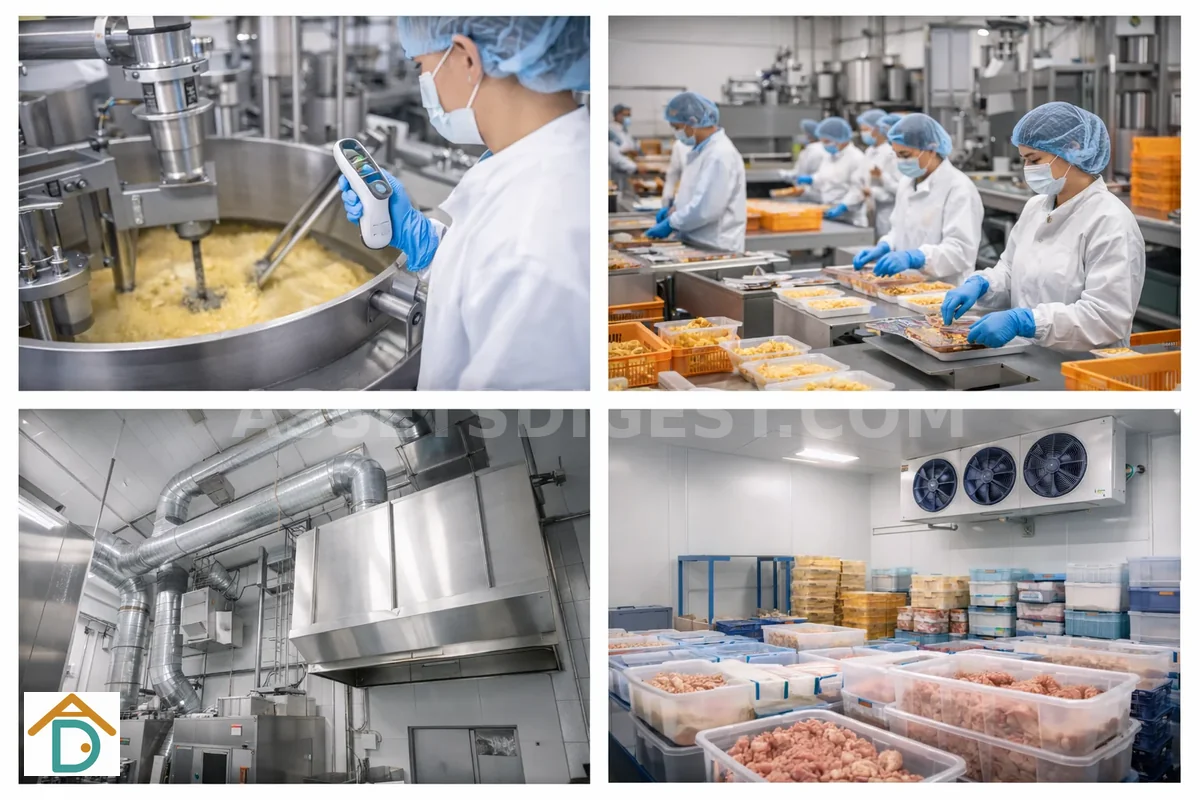
Cloud kitchen vs central kitchen
A cloud kitchen is usually set up for delivery-only food preparation, with no dine-in area. In some cases, several brands may operate from the same kitchen space.
A central kitchen is usually used for larger-scale preparation or batch cooking, often to support multiple outlets, stalls, cafes, or retail points.
The exact business model may differ, but both types of kitchens usually create the same building-level concerns:
- grease and cooking fumes
- odour
- heat and steam
- wash-down water and wastewater
- higher electrical load
- higher fire safety requirements
- heavier fit-out works
So even before the operator speaks to the licensing authorities, the unit needs to be checked as a physical kitchen space.
Zoning and approved-use reality
Industrial zoning in Singapore is not a blanket permission for every type of industrial activity.
A B1 light industrial building is generally meant for cleaner, lower-impact uses. A B2 general industrial building can usually support heavier or more intensive activities. But for a cloud kitchen or central kitchen, the question is not just whether the building is B1 or B2.
The more important question is:
What is this specific unit approved to be used for?
A landlord may describe a unit as “industrial”, “warehouse”, “production”, or “factory space”, but those descriptions are not enough. The approved use on record matters. If the unit is currently approved for warehouse or general industrial use, food production may still require a formal change-of-use approval.
This is where tenants often get caught. They assume that because the building is industrial, food production should be acceptable. But if the approved use does not match the intended activity, the tenant may end up with a unit that cannot be used as planned.
Building management is another practical layer. Even if the zoning and authority approvals are possible, the building or estate may still restrict cooking activities. This is common in flatted factories, strata-titled industrial buildings, and estates with their own management rules.
These checks should be done before shortlisting the unit seriously, not after the lease is already being negotiated.
Verification steps:
- Check the Master Plan zoning for the lot using URA Maps.
- Confirm whether the building is B1, B2, or another industrial classification.
- Submit an approved-use enquiry for the specific lot and unit number.
- Ask building management whether cooking, food production, exhaust ducting, and grease trap installation are allowed.
- If the intended use is unclear or borderline, clarify with the relevant authority before committing to the unit.
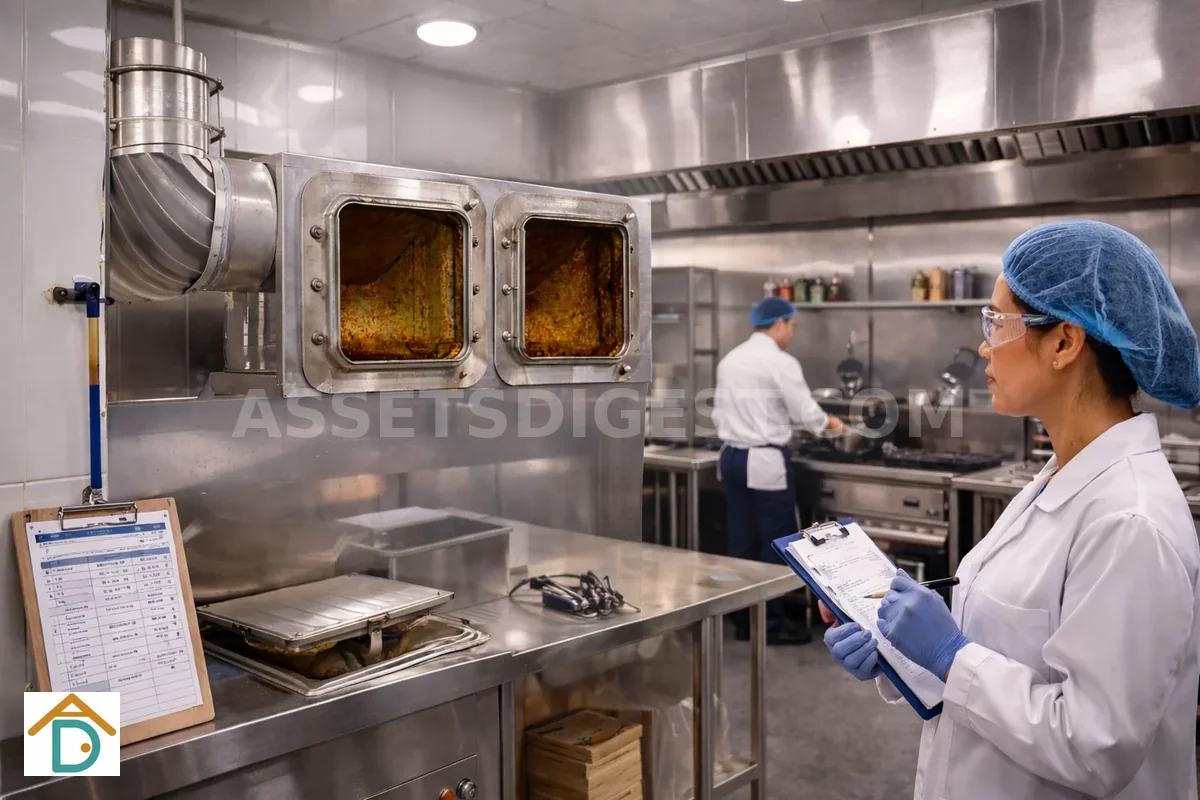
Key infrastructure constraints
1) Exhaust routing and discharge
For cooking-heavy kitchens, exhaust is usually the biggest make-or-break item.
The issue is not just whether an exhaust hood can be installed inside the unit. The real questions are:
- where the duct can run
- whether there is an existing exhaust shaft
- whether the shaft has enough capacity
- where the exhaust will discharge
- whether the discharge point is acceptable
- whether filtration or odour treatment is required
- whether the duct route affects other tenants or common areas
A unit can look perfect internally but still fail if there is no proper route for exhaust discharge.
This is especially important for fryers, tandoors, grilling, roasting, or any setup that produces grease-laden fumes. If the exhaust cannot be routed properly, the licence application may not even be the main problem. The building simply cannot support the operation.
2) Grease management and drainage
Cooking produces grease, wastewater, and cleaning discharge. These need to be managed properly.
A viable kitchen unit may need:
- grease traps
- proper floor traps
- suitable drainage points
- waterproofing
- designated washing areas
- proper separation between clean and dirty workflows
This should not be treated as a minor plumbing detail. If the unit does not have the right drainage arrangement, retrofitting can be expensive or impossible, especially in upper-floor flatted factory units.
Grease management also affects building maintenance. Poorly managed grease can cause choke points, odour issues, pest problems, and disputes with building management or neighbouring tenants.
3) Power, ventilation, and heat rejection
A cloud kitchen or central kitchen can draw much more power than a typical light industrial tenant.
The kitchen may need to support:
- combi ovens
- fryers
- chillers
- freezers
- cold rooms
- exhaust fans
- make-up air systems
- dishwashing equipment
- food preparation machinery
A unit may have enough floor area but not enough electrical capacity. Power upgrades may be possible, but they can take time and may depend on building capacity, landlord approval, and utility upgrade works.
Heat is another issue. Cooking equipment, refrigeration equipment, and ventilation systems all add heat load. If the unit cannot reject heat properly, the kitchen may become uncomfortable, inefficient, or unsafe to operate.
Regulatory touchpoints for cloud and central kitchens
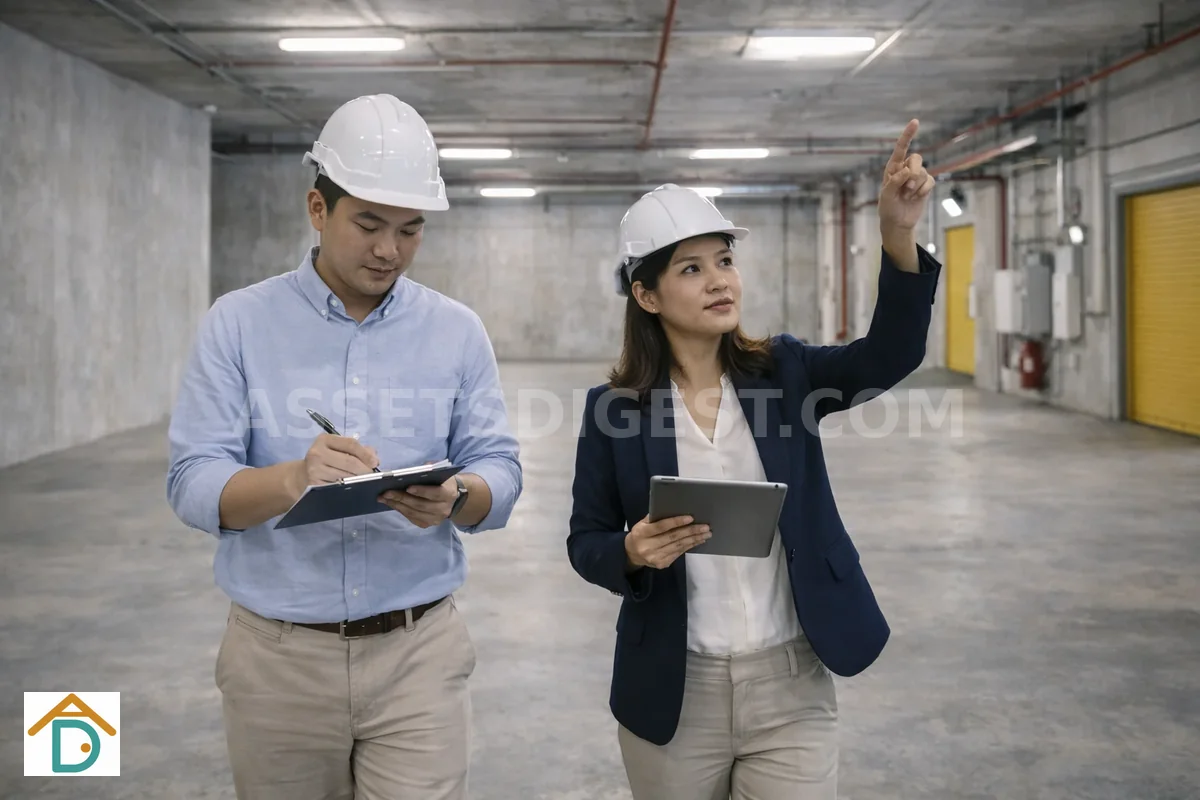
Once the physical unit looks workable, the next step is to understand the regulatory touchpoints.
For food production in an industrial unit, there are usually several tracks to think about. They are related, but they are not the same approval.
Singapore Food Agency
The Singapore Food Agency is concerned with food safety and licensing.
For a cloud kitchen or central kitchen, this usually means looking at the proposed food activity, premises layout, hygiene provisions, equipment setup, storage arrangements, and operational workflow.
This is the part most tenants think about first. But in practice, the SFA licence is only one part of the picture. If the approved use, exhaust route, drainage, or fire safety setup is not workable, the food licence alone will not solve the problem.
National Environment Agency
The National Environment Agency becomes relevant where the kitchen creates fumes, odour, emissions, noise, or other environmental impact.
For cooking-heavy operations, the exhaust system is not just an internal fit-out item. The way air is discharged from the building can affect neighbouring units, nearby buildings, and sensitive users in the area.
This is why exhaust discharge, odour control, filtration, fan noise, and plant location should be considered early. Leaving these items until the contractor stage can create serious delays.
Singapore Civil Defence Force
The Singapore Civil Defence Force is relevant because commercial cooking increases fire safety risk.
Deep fryers, open-flame cooking, tandoors, high-heat equipment, gas systems, and heavy electrical cooking equipment can all affect the fire safety design.
Depending on the setup, the unit may require additional fire safety measures, suppression systems, proper compartmentation, clear escape routes, and professional submissions.
This is another reason why the equipment list matters. A light preparation kitchen and a heavy cooking kitchen may look similar on a floor plan, but they can be very different from a fire safety perspective.
Practical checks before signing
Before signing a lease, the tenant should slow down and check the unit as an operating kitchen, not just as an industrial space.
The most important checks are:
- Is cooking or food production allowed by building management?
- What is the unit’s approved use on record?
- Is there an existing exhaust shaft or approved discharge route?
- Can the exhaust route reach a suitable discharge point?
- Is grease trap installation possible?
- Are there suitable drainage points and wash areas?
- Is the electrical capacity enough for the equipment list?
- Will power upgrades be needed?
- Are there existing food tenants in the building?
- Has the landlord or previous tenant done similar approvals before?
- Will fire safety works be required?
- Are there restrictions on operating hours, odour, deliveries, or waste disposal?
Existing food tenants in the same building can be a useful sign, but they are not a guarantee. Their units may have different shafts, different approvals, or grandfathered arrangements. Always check the specific unit.
Key takeaways for unit shortlisting
For cloud kitchens and central kitchens, viability is decided before the licence application.
A unit must first be able to support the physical requirements of the kitchen: exhaust routing, discharge, grease management, drainage, power, ventilation, and fire safety.
The rent may be attractive, and the zoning may look broadly suitable, but those points are not enough. If the building cannot support the kitchen infrastructure, the unit is not viable.
The safest approach is to shortlist units by infrastructure first, then move into licensing, design, and lease negotiation.
For the full activity matrix, see the allowed activities guide. For pre-renovation checks, see the compliance pre-reno checklist.
References
[1] SFA — Food manufacturing and storage licence and registration requirements. https://www.sfa.gov.sg/food-manufacturing-storage/licence-registration/requirements-for-licence-registration-for-food-manufacturing-storage
[2] NEA — Industrial Siting Consultation (ISC). https://www.nea.gov.sg/our-services/development-control/guidelines-for-building-plan-submission/industrial-siting-consultation
[3] SCDF — Fire Code 2023: Appendix 01 (Fire Safety Report). https://www.scdf.gov.sg/fire-safety-services-listing/fire-code-2023/table-of-content/appendix-01/appendix-01-fire-safety-report
[4] URA eService — Enquiry on Approved Use of Premises. https://eservice.ura.gov.sg/EnquiryOnApprovedUse/
[5] URA — URA maps (Master Plan / zoning lookup). https://www.ura.gov.sg/maps/
[6] GoBusiness — URA: Change of Use Approval. https://licensing.gobusiness.gov.sg/licence-directory/ura/change-of-use-approval